Entertainment, Education or unnnecessary invasion of their space.
There is definitely a fine line between presenting an educational wildlife show or documentary and using such a programme or film as a vehicle to becoming a showman or celebrity. The late Steve Irwin alias the Crocodile Hunter achieved celebrity status and famously died under tragic circumstances.
Although much adored and respected his actions could be viewed as no different than a circus entertainer, just a showman whose antics publicised his zoo and gave totally the wrong impression on how animals should be treated and acted around. But this didn’t stop the media labeling him as a wildlife expert, conservationist, TV personality and all round good guy.
Provoking animals makes good television
He appeared to show little empathy towards animals but went out of his way to dominate them by provoking, taunting and aggravating them to get a reaction on the pretext of demonstrating their natural behaviour and this obviously made entertaining television rather than the animal just sitting and contemplating its surroundings.
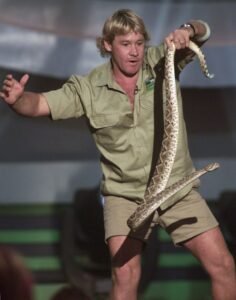
Unfortunately for Steve Irwin he goaded or invaded the space of one animal too many and it took its revenge, or was it just reacting naturally to a threat. It was a needless tragedy brought about by unnecessary wish to show off and entertain. Such behaviour no doubt inspires other would be “showmen” or “he-men” to produce TV programmes and even encourage other people to act in the same way towards animals.
He-man of natural history.
In the UK the Radio Times described Steve Backshall as the ‘he-man of natural history’ due to his ‘how close can I get and still walk away’ doctrine of approaching potentially lethal creatures in many of his TV series. His modus operandi involved tormenting and aggravating and goading them into a reaction.
There are many reality and pseudo-wildlife programs fronted by celebrities and heroic presenters which involve killing animals or stressing them and we even have extreme fishing whereby poor fish that have taken decades to grow to an enormous size are depicted as “monsters”, hunted down, caught and killed just for perverse entertainment.

Such programs have unfortunately become very popular because we seem drawn to these personalities treating them almost as heroes and we do not question whether their actions and methods are benefiting the animals they are ‘presenting’.
David Attenborough critical of killing animals for entertainment.
David Attenborough recently criticised Bear Grylls for killing animals for entertainment on his reality shows. So-called celebrities were encouraged to unnecessarily kill animals to “survive” in the name of charity to prove some inane survival point. David Attenborough was quoted as stating “we’ve never killed an animal [in a film]. Bear Grylls will have to answer for himself”.
The presenter also came under fire in 2016 when a so-called reality star killed a crocodile by stabbing it in the neck. Animal rights supporters argued that the crocodile was not killed humanely and that it was done purely for ‘entertainment’, was unnecessary, and sent out the wrong message about the status and use of animals. More recently he was accused of exploiting animals for greed by opening a shark attraction and criticised for promoting the use of snares in his Bear Grylls Survival Guide which was withdrawn from sale.
It may all be good television, as reptiles and fish are notoriously difficult to encourage to put on a good show, but surely it is unnecessary and only promotes the doctrine that it is OK to view animals as objects to dominate and subjugate, tease and provoke and even kill without compunction – not really the ideal impression to give young people.
Those involved argue that it is educational in trying to prove their natural behaviour and animals are not “harmed”, but most wildlife documentaries seem able to do this without such unnatural interference. Now that we have the technology to produce such wonderful wildlife and nature documentaries such as the Blue Planet is it not time for such archaic television presenting to be consigned to history?