Boxing Day Hunts still attract crowds & violence.

Boxing Day Hunts still attract the crowds, demonstrators and violence, but why?

Sixteen years after hunting was banned the unnecessary Boxing Day Hunts gather and take place on the pretext of preserving rural tradition and these attract the inevitable controversy and conflict which has accompanied them since the Hunting Act 2004 was introduced.

The Act was supposed to stop hunting and settle all the arguments once and for all, but as with most animal protection law it has failed dismally and we still must put up with all the nonsense caused by the red-coated individuals who use every excuse to continue their hobby and flout the law and escape prosecution.

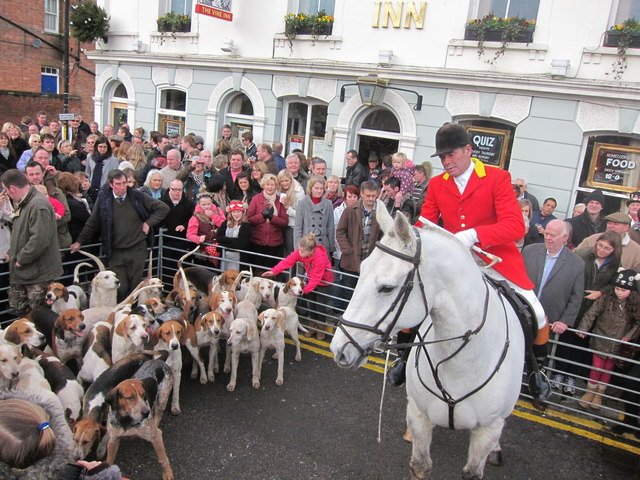
One such “hunt” gathers each year in the picturesque Kentish town of Tenterden, once my childhood home, where every 26th. December at around 10 a.m. I had a birds-eye view of the hunt from my bedroom window  when they noisily assembled outside 70 High Street where we lived above my father’s shop.

The annual day of chaos has economic benefits for the town and is therefore welcomed.

Although an extremely picturesque sight it also caused chaos as thousands of people from all over the district piled into the usual sleepy town and gridlocked it for two hours or so until  the Hunt, suitably imbibed with drinks from the Vine Inn Public House next door, cantered through the melee to the sound of horns like the charge of the Light Brigade to cheers and waving from the onlookers. This annual chaos is of course welcomed by the town because of the economic benefits involved.

I watched this annual event from about 1957 until I left home in 1975 and it was noticeable that its attraction never wavered, while my attitude against hunting became more established despite being countryside bred. During my informative years as a youngster demonstration was almost non-existent and little thought given to the ethical and moral issues of hunting as it was just a lot of fun the day after Christmas.

Four decades on, it is clear that the popularity of these festive hunts is on the increase with more people than ever attending, but why do the hordes continue to descend in this way. Is it to support the Hunt or because they are purely viewed as family entertainment?

The Hounds have always been the biggest draw

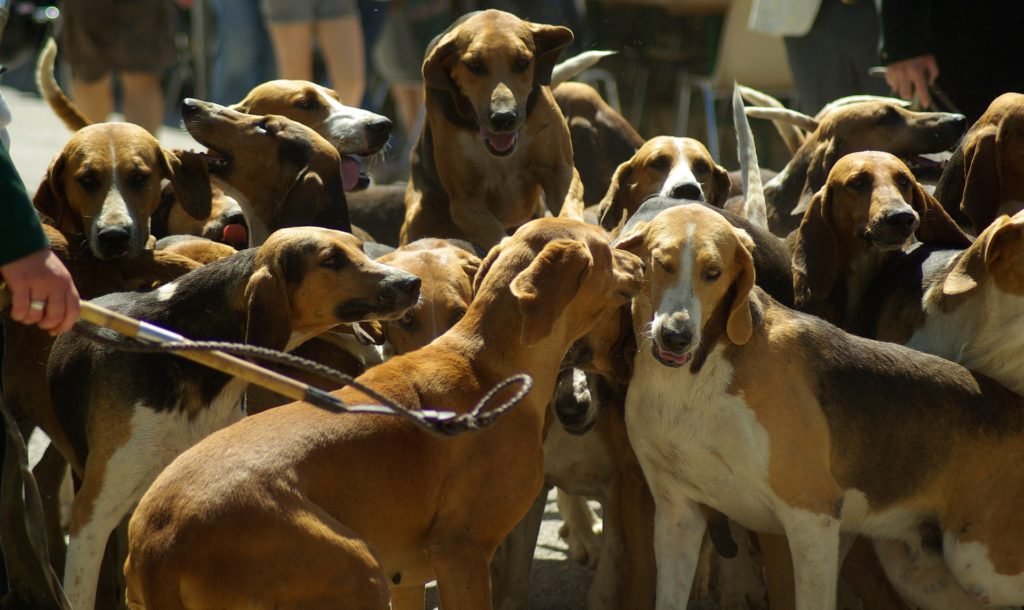
From my bedroom it was always obvious that the hounds were the biggest draw with everyone including me wanting to get close to pet them even though they smelled rank due to the poor conditions they are kept under, something most of us were unaware of. They were noisy, boisterous, cheeky and naughty and appeared to be having a great time.

The horses were also a draw, but in hindsight it is difficult to understand why we all stood around, often in freezing weather, for an hour waiting for a group of red and black-coated horsemen and women to finish a morning drink outside a pub.
Hunting hounds, fox hunting, cruelty to dogs
The hounds are usually the major draw for crowds at Boxing day Hunt meets.

Boxing Day hunts attract the crowds in ever-increasing numbers.

I no longer have any real association with Tenterden and rarely if ever visit because my father’s shop closed in the late eighties and both my parents have died, but the scenario shows that nothing has changed over the last four decades and despite all the campaigning and hunting ban we are even more happy to support such events despite what they stand for.

The Boxing Day Hunts are just a spectacle for most, but for hunt supporters they are an important way of keeping the debate in the public eye until that Nirvana in the future when hunting is legalised again.

Lets take the hounds out of the equation.

The law makers missed a golden opportunity to put an end to all this violence and mayhem towards both humans and animals on both sides of the debate. All that was needed was to make it illegal to participate in a drag hunt and to own, breed, keep or let loose packs of more than two dogs onto any land whether private or common for any purpose.

Arguments that the dogs (and horses) would all be killed as they are unsuitable as pets was always groundless as there will always be an animal lover on hand to devote their energies into saving them if required.

There is no reason why the meeting up of hunts cannot continue in order to maintain the postcard images and spectacle. There is no harm in allowing them to meet up outside a local village pub on horseback for a few drinks dressed in their red and black finery for the sightseers to clap and cheer as they ride off at the sound of the horns. They can still continue enjoy an exhilarating gallop across the countryside in search of wildlife, but let us dispense with the hound pack and drag hunting and the use of the poor creatures as bargaining chips to continue hunting.
Related Articles:

Fads and crazes: pocket pets and teacup dogs – we never learn.

Fads and crazes have being going on for decades beginning with the hamster in the 1930’s and now pocket pets and teacup dogs.

Whenever the pet trade and animal breeders feel that the market is becoming stale, they are very good at producing and introducing new fads and crazes to keep the gullible and fickle pet acquiring public in the mood for acquiring pets. This has being going on for decades beginning with the hamster in the 1930’s and now pocket pets and teacup dogs. The pet trade are very good at manipulating us by coming up with new species of animals to promote and sell by using social media and clever marketing to make the poor creature a must have.

Fads or crazes for a type of pet come along at regular intervals and many begin in the USA and are often driven by so-called celebrities who if photographed with a certain breed of dog immediately incite a rush to acquire the same.

We are also bizarrely influenced to buy certain animals by movies, particularly animated ones, when children badger their parents who disgracefully submit to their requests. We never seem to learn as back in 1980’s I remember the ninja turtle movies spawned a disastrous craze for baby turtles. The pet trade jumped all over this fad with a lot of help from the media, which resulted in coerced parents buying these tiny creatures to placate their youngsters , with no regard or common sense to their long-term needs and the problems that would occur.

I was working as an animal health inspector at the Animal Quarantine Station at London Heathrow airport at the time and saw these beautiful tiny creatures bred and shipped in their thousands arriving from the USA in aircraft holds. 200 writhing turtles were piled into each small cardboard box, and flown worldwide to meet the demand. Many died or were squashed en-route, thousands died after being bought and thousands abandoned into waterways to take their chances when they grew too big causing environmental and health issues.

In the late nineties we had a craze for chipmunks or small side-striped squirrels driven by the Alvin animated films and in 2010 a television advertising campaign incredibly led people to buy meerkats as pets.

In 2016, the US pet trade was boosted by two animated films ‘Finding Dory’ and the ‘Secret Life of Pets’ which ‘attracted the interest, attention and investment in both new and existing pets according to Euromonitor.com pet care industry reports. These films also show the draw of animals to both children and adults as they grossed nearly US$2 billion between them. The fact that we are easily enticed into acquiring live animals on a whim is frightening.

Pocket Pets

Pet rat, pocket pet, rat
Pocket pets is just one of the continual fads and crazes we insist on falling for regardless of the consequences to the poor animals.

Recently we have seen a fad for so-called ‘pocket pets’, their popularity spread by social media all around the world with the obvious consequences. Originally the idea was to market small pets like mice, rats and hamsters as ideal pets for carrying around in your pocket. Apart from anything else, this is an extremely unhygienic idea and of course cruel. It is not really a new fad, but a re-invention as many schoolkids have carried pet mice in their pockets for decades particularly to frighten their teacher.

The market for keeping once popular small mammals was declining and viewed by many as ‘boring’ so something was required to make them more appealing. This was achieved by re-inventing them as ‘pocket pets’.

At first the term pocket pets was restricted to small mammals such as mice, rats and hamsters, but unfortunately the term was soon hijacked and re-branded as any pet ‘the size of a pocket’. This has led to totally unsuitable pets being marketed with small exotic species like skunks, chinchillas, degus, prairie dogs, sugar gliders and flying squirrels and even tortoises and birds, obviously too big for most pockets.

Rabbits were also re-branded when their appeal declined due to fewer people having gardens and so they became ideal ‘house pets‘ and a craze for huge breeds of rabbit was born.

This has in turn created unsuitable and poor standards of care resulting in premature deaths, suffering and more discarded animals. As far as the pet trade is concerned, any animal species can be made into a suitable pet and so skunks have their scent glands removed to make them acceptable.

Designer Dogs

In the UK, whichever breed won the national dog show at Crufts became the must have dog, then we had a craze for macho breeds such as the German Shepherd back in the sixties when everyone was into guard dogs, then Dobermanns and Rottweilers and recently Pit Bulls and Staffordshire Bull Terriers that have become the blight of many parts of the world. But times change and with the help yet again of social media we have progressed to the recent fad for designer cross breeds with nonsense names and even more recently the French Bulldog has come to prominence with 10.5 million photographs of it on Instagram following its celebrity status with people like Lady Gaga.

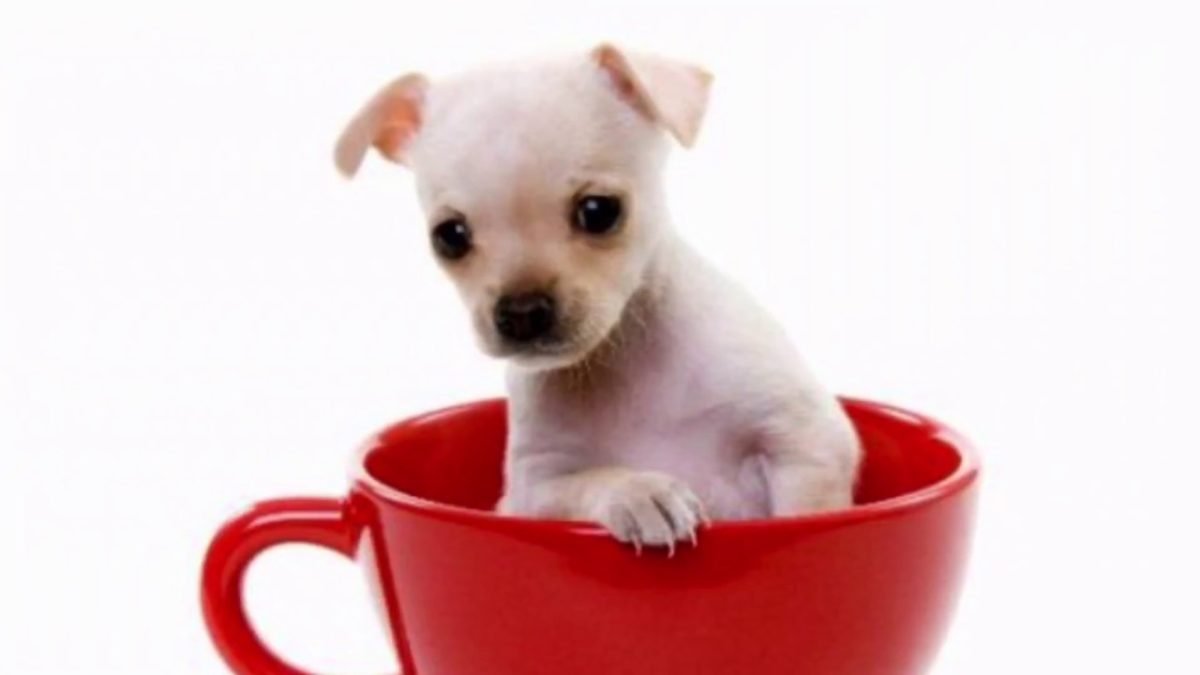
Handbag and teacup dogs

Then we had a celebrity led craze for “handbag” dogs which were just traditional toy breeds, but  someone had to invent the fashion trend to carry them instead of allowing them to be normal dogs. Not satisfied with handbag dogs we have moved on to another new fad for so-called “Teacup” dogs.

At one time these tiny dogs only existed in natural form as runts of a litter, the last in line, the weakest and sickest which often died or were ignored by their mothers. The clue to the health status of these dogs is in the term runt, but somewhere along the line someone decided what a good idea to start mating these sickly runts by seeking out and intentionally mating undersized dogs and begin a craze for these ‘cute’ miniature dogs.

They are called new breeds but of course this is nonsense, but a good marketing point. The market is mainly gullible young girls and other ‘fashion’ conscious women who inexplicably feel they are a necessary accessory and part with hundreds if not thousands of pounds to own one. For every post on the internet advising against buying one there is another extolling the virtues of getting one.

Someone has even invented a standard for a teacup breed which stipulates that they must be less than 17 inches long at age one year and weigh four pounds or less to qualify. This immediately raises problems as there is no guarantee what size it will grow to when bought as a tiny puppy and possibly disappoint its owner. They also come with a never-ending list of health, behavioural and safety issues including being easy prey for hawks, other dogs and predators, being stepped on, dying from falls and requiring special feeding and toileting.

Despite all this it doesn’t deter people from buying them and it is the same for all the other unsuitable pets as well. We have little interest in the needs of animals and the repercussions involved only self-interest and so we never learn – we just move on to the next poor creature to exploit.