
Are we prioritising the protection of animals over that of children?
It could be argued that our present society has a bias towards amending and introducing legislation protecting animals at the expense of children. Some might feel that we expend too much time, debate and attention on animals and their welfare at the expense of children even though child abuse is widespread.
Not a day goes by in Parliament and the House of Lords without animal welfare and protection issues being debated and new laws being discussed or implemented, particularly for our beloved dogs. It seems rare for any updating of child protection legislation or concerted efforts to protect them even though they are no more able to defend themselves or escape abuse than kept animals.
One correspondent once wrote to a U.K national newspaper about the perceived hatred of children and the insane obsession with dogs and pets thus:
As for the the much-repeated claim that the British are the most tolerant nation on earth, I find tolerance very selective. Anyone who dares to maintain that dogs are dangerous and that pet-keeping is anti-social, while children are lovely and far more important, discovers rapidly just how tolerant the British really are.
Daily Mail Letters page.
What chance the welfare of animals when we cannot adequately protect our children from abuse.
The recent shocking incident in Eastbourne where seven children aged between four and seventeen and 36 dogs were found in one house severely neglected and maltreated by a couple should be a wakeup call. The incident was a double whammy involving both types of abuse coinciding in one residence.
The offenders in the case received six-year sentences for child cruelty and eighteen weeks for animal cruelty. The mother received a five-year ban and the father an indefinite ban on keeping animals, but no ban on keeping children as this is of course unthinkable. It will take a lifetime to heal the long-term physical and mental harm inflicted on the children which will take years to rehabilitate them.
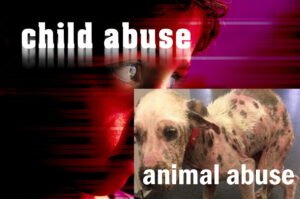
Children and babies are no more able to defend themselves or escape abuse than kept animals.
Although we ban people from owning animals when it is considered they are incapable of looking after them or a risk to them, we remove pets from feckless owners who mistreat them and we issue warning and penalty notices we cannot contemplate giving children the same help.
There are many parallels to be made in regard to how we legislate and enforce protection of animals and children. The RSPCA takes the burden of enforcing and prosecuting animal cases even though they have no statutory powers, for which they are often maligned for being too aggressive.
Yet the NSPCC and social services who do have powers to intervene and prosecute seem unable or unwilling to take a stringent approach when death, neglect and cruelty to a child is involved. They rely on the overburdened and cash strapped Crown Prosecution Service (CPS). Prosecutions are dropping and social services are inundated and unable to cope in many parts of the country. This state of affairs has continued for decades
Child abuse and murder rampant in the U.K.
On average seven children a month are murdered in the U.K. Between 2015/16 and 2019/20 there was an average 82 child homicides a year in the UK mostly by filicide – the killing of a son or daughter by the parents, with babies under one year old having the highest rate. 55,000 at risk children were on a Child Protection plan and 55,000 were being looked after by local authorities.
When it comes to neglect the figures are even more depressing. Between 2019 and 2020 there were over 23,000 recorded offences. Neglect is defined by not meeting a child’s basic physical and psychological needs which can have serious and long-lasting impacts on a child’s life causing serious harm and even death. In 2020 The Child Safeguarding Practice Review Panel received notification of 482 serious incidents relating to 514 children. Of these notifications, 206 were in relation to child deaths and 56 were attributable to abuse or maltreatment.
In the year ending 31 March 2020 there were 3,347 child death reviews in England. 862 cases were identified as having modifiable factors which may have contributed to the death of the child, and which might or could have been avoided such as the family environment, parenting capacity and service provision.
It is right that we have so many animal protection laws, but we should also be spending more time, money and resources to protect our children with more extensive and harsh laws that are policed adequately, because we appear to be severely letting them down at the moment. The incident mentioned above highlights the fact that we haven’t really moved on since Victorian times. What chance the welfare of animals when we cannot adequately protect our children from abuse.