Most of us do not like having what is called our ‘personal space’ invaded and some of us quite rightly get very agitated when this occurs. When it involves wild animal encounters we arrogantly believe that when invading their space, that they should tolerate our intrusions without any complaint or retaliation.
Wild animals usually instinctively slink away at our approach and only become dangerous when they are provoked…..
When we come face to face with a truly wild animal we do know our limits and that apart from putting ourselves in danger we are also putting the life of the animal in danger. Those of us who live in countries which do not harbour potentially dangerous wild animals may be excused for this behaviour as we are not familiar with the threat, although even domesticated cows and bulls can react if approached in the wrong way as many people have found to their cost.
Our refusal to show common sense and be responsible for our own health and safety by allowing wild animals their personal space often results in the death of one or both participants and highlights our complete ignorance of the capabilities of wild animals and how we should act near them. Our increasing detachment from nature and our insistence of seeking thrills and entering wild places is making this kind of incident more common. We have no perception of the danger we might be putting ourselves in as we have been lulled into viewing wild animals as placid creatures and an opportunity for a selfie through the advent of social media and petting attractions in foreign lands.
Wild animals usually instinctively slink away at our approach and only become dangerous when they are provoked in some way or feel threatened, particularly if protecting their offspring. In countries such as the USA, Canada and Africa, where residents should perhaps know better, many individuals often insist on putting themselves and the animals they encounter at risk by entering areas supposedly set aside as much for the animals as ourselves and best not frequented, often ignoring advice to the contrary.
We do not take warnings seriously
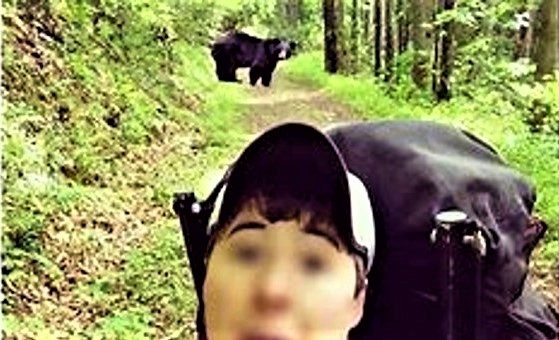
There are unfortunately many examples of fatal attacks which highlight this behaviour. Darshe Patel was hiking with four friends in a Reserve in New Jersey, U.S.A and were told to turn back because a bear was in the area, but they continued and came across the bear. He stopped to take a photograph and was attacked and killed by the black bear. His four friends ran for their lives and survived. The bear was tracked down and shot. A man named Brad Treat was mountain biking in a Montana forest reserve when he collided with a grizzly bear. The startled bear immediately attacked and killed him, but was not killed “because its behaviour was a natural response to a surprise encounter involving physical contact“.
In another incident in Yellowstone Park, a couple walked up to a bison and tried to take a selfie only to be trampled and in 2015, an American woman in a South African lion park ignored warnings to close the car window while taking photographs, allowing a male lion to get within a yard of her before jumping and mauling her to death.
Animal encounters can prove fatal for all those involved.
In August 2015, a medic named Lance Crosby, aged 63, who was working in Yellowstone Park, decided to ignore warning notices and take a hike into a restricted area, only to bump into a grizzly bear named Blaze and her two young cubs, who being extremely protective of them and feeling threatened promptly attacked and killed him.
Although she was popular in the park and had a ‘clean record for attacking’ people, she was immediately faced with the death sentence and during the seven days that her fate was in the balance the entire world pleaded for her to be reprieved. The investigation of the ‘murder site’, which included DNA sampling and footprint analysis, proved it was her that killed the unfortunate man and her big mistake, and what sealed her fate, was eating parts of him, so she was hunted down and shot for public safety reasons and her two poor cubs were shipped off to Toledo zoo to spend a lifetime in captivity, all because one misguided person decided to invade her space.
The Washington Post quoted the park superintendent as stating that ‘We can’t favour one individual bear over protecting the lives of humans’, a standard comment for all such human deaths by animals and ‘the decision was made based on sound science’.
Invading their space
Although we set aside large swathes of land in the name of conserving animals and habit and give them such impressive names as national parks, reserves and conservation areas, in reality they have just become giant adventure playgrounds for us humans and our families to mountain bike, hike, picnic, climb mountains, kayak in rivers and shoot the rapids with no consideration of the disturbance to the animals. Far from being safety zones for them we increasingly invade these spaces, trample over the habitat, disturb them and if they should dare to retaliate by attacking us, we dispose of them.
It hardly seems fair to me and if we are truly genuine in our declared aims to preserve wildlife for the future perhaps we should give some serious thought to whose benefit these areas are truly for and keep the ultimate predator humans out of them.
So, the moral of the story is when enjoying these wonderful wild spaces and encounters with animals keep your distance and please give them a little more respect. Our irresponsible and uninformed behaviour can cause their deaths.