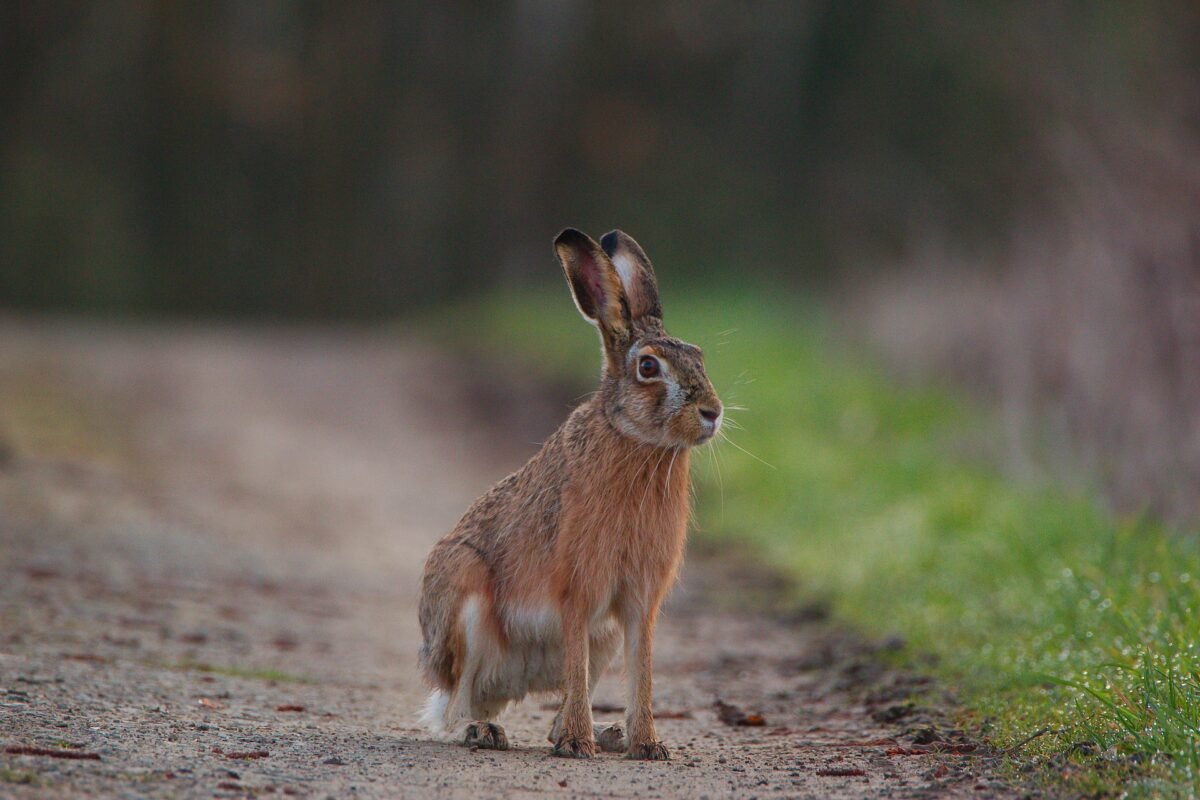
Hares beleaguered on all sides & on the run.

Hares have no legal protection

It may come as a surprise to many that the iconic and much loved hare is designated as a pest and a game animal and unlike other game animals has no close season so is totally unprotected under UK law. Therefore, it has no respite at all from being killed and persecuted by poachers, coursers and hunters and some unsympathetic farmers.

I am lucky enough to live in an area of the UK where hares appear to be prolific judging by the fact that hardly a day goes by when I do not see them cavorting in the fields while I am driving past or when on walks. Not just individuals but sometimes five or six together. I count myself lucky to have so many up close encounters with them and I am always amazed at their size and sheer beauty. They have become one of my favourite UK wild mammals.

Sad then that they are the least protected of all “game” animals and that so many people seem to hate them. Game animals are those that over time hunters have decided are fair ‘game’ to be killed and eaten and over time have had this status enshrined in law. Most game animals have a “close” season of a few months usually during their breeding season to build up numbers to be hunted and shot for the rest of the year.

Give these animals a break

Philip Mansbridge, CEO of Care for the Wild International, said: I think people would be shocked to know that the people who shoot hares are the ones who get to decide on whether or not there should be a close season. DEFRA needs to step in, involve wildlife organisations to get some balance, and give these animals a break.”

Unfortunately for the hare, a quirky antiquated 19th. century law called the Ground Game Act 1880 (can you believe that?) allows their legal shooting throughout the year including the breeding season, which stretches from February to September, leaving them the only game animal in England and Wales in this situation. Good old Scotland plus 18 European countries have a close season but not the animal loving UK.

Of course, the Countryside Alliance believes a close season would be detrimental to them and that their numbers are stable, so oppose any legislation, while conservationists and welfarists obviously beieve that killing lactating females thus causing the deaths of their dependent young is cruel.

They are being attacked on all sides by illegal hunting, legal shooting, pest control, disease and loss of suitable habitat and food sources
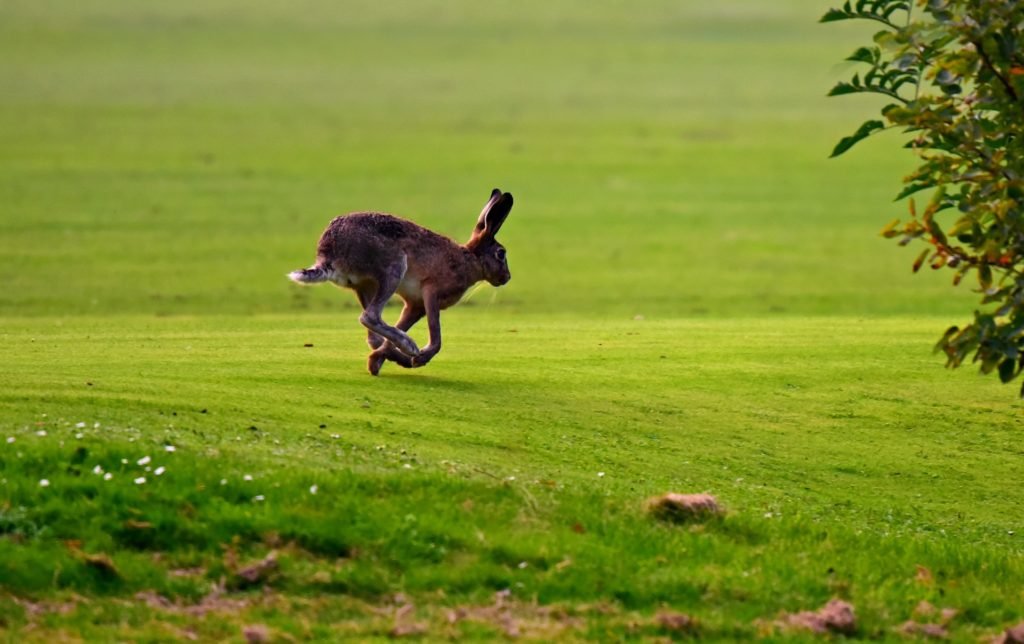
Hare, hare coursing, illegal hare coursing

To compound things further they are also a designated pest being lumped together with the rabbit as an animal that rampages over the countryside destroying crops and eating the bark off trees during the winter when food becomes short. Their natural diet is grasses and herbs. Pest controllers are quick to point out that they carry fleas and carry a disease called Yersiniosis that can cause serious illness or death in humans, just to make them more disliked.

Their numbers allegedly constantly decline and it has been said that if they were not such quick breeders they would be extinct by now. Many decades ago there were some 4 million hares but estimates now put the figure anywhere between 6-800,000. No one really knows as few people have much interest in the poor creature so research is very outdated. There are some outlandish estimates of up to 400,000 being shot each year which on the face of it does not appear accurate.

Hedgerows and meadows, the preferred living areas for hares, have declined and the modern open farmed fields leave them exposed and vulnerable with less food. Herbicides and pesticides can be lethal to them. Hares have also suffered in recent years from the move away from mixed farming, which provided the variety of grassy habitats they need to feed and raise a family, to intensive arable or livestock production.

To add to their misery hares are now threatened by a rabbit disease haemorrhagic disease type 2 which causes lung bleeding and hepatitis and some scientists believe that mxymatosis may be spreading from rabbits to hares.

Let’s face it, hares could do with a few more friends.
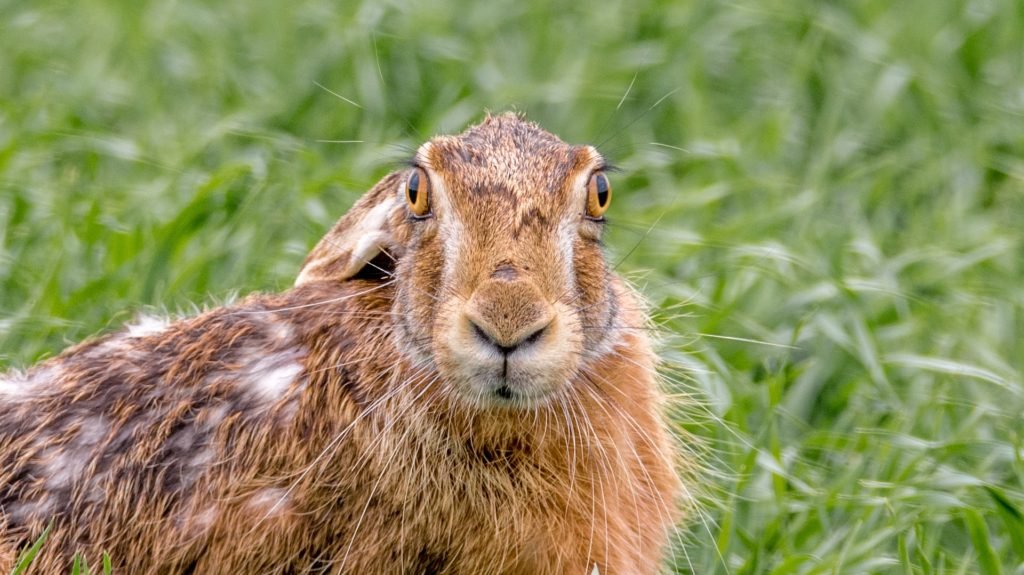
Hare, hare coursing, illegal hare coursing, cruelty to animals, animal welfare

The hares also have to face persecution by illegal hare coursing particularly in my area of East Anglia and no walk in the countryside can be completed without seeing signs nailed to gate posts asking for any suspicious behaviour to be reported to the police.

Ironically hares are supposedly a “priority species” under the UK biodiversity plan to increase numbers of vulnerable species. So, why is their protection such a low priority with few INTERESTED IN HELPING THEM?

There is a petition asking the government to make it illegal to shoot them that anyone interested in these wonderful creatures can sign.

Related Articles:

Animal Welfare Commissioner, Labour’s not so new idea.

Just a case of maintaining standards or championing their rights and interests?

The Labour Party’s new animal welfare manifesto has been welcomed and praised by all according to press reports and its content  makes gratifying reading, but unfortunately most of it has been visited before and has never been implemented so what chance now. One of the main proposals is to introduce an Animal Welfare Commissioner. This is not a new concept and many countries have implemented a commissioner, minister or Ombudsman for many years. We continue to lag behind as always. I have been arguing that England should have one and have written on the subject before.

There has been debate for several years on whether it is time for the UK to have some form of official legal representative or watchdog solely responsible for representing the rights and welfare interests of animals. Noel Sweeney, a Barrister and well-known advocate of animal rights has lectured and written about the need for an animals’ ombudswoman for a decade. He has suggested that such a person could represent all animals in Court and Parliament where any action affects their welfare and future and meet with the Law Commission to introduce a new Act with the paramount principle of granting animals a legal personality.

Furniture counts higher than living animals.

It is strange that we haven’t had such a person years ago particulalry as we have an ombudsman for virtually everything else including various industries and state organisations like communications, energy, finance, the motor industry, health, housing and even ones for the removal trade, estate agents and the furniture industry. Obviously bits of furniture count higher than living animals, but there is nothing for the pet trade industry which appears surprising particularly as it brings over £7 billion to the UK economy.

We can complain to our heart’s content when we feel we have been hard done by, but animals literally cannot voice their concerns and complaints and even if they could there is no ombudsman representing them. As owners or keepers of animals we cannot put their case for them either.

A case of maintaining standards or championing their rights and interests?

The role of the Animal Welfare Commissioner is to ensure:

“that animal welfare standards are always considered as legislation is introduced and as Britain takes part in international bodies, trade deals and obligations”

and also

“responsible for gathering the latest scientific evidence on animal sentience and animal welfare” and “work alongside Government to assist in the promotion of best practice in animal welfare internationally”.

Of course, maintaining “animal welfare standards” is a far cry from taking into account the rights and interests of animals which is not mentioned.

Many people feel it is a silly idea and taking things a bit far, but we have already taken a step towards this by establishing ‘independent’ Committees such as the Farm Animal Welfare Committee (FAWC) and the National Companion Animal Focus Group (NCAFG) who supposedly safeguard animals’ interests.

Impossible to be independent

The main problem is whether such a person would be allowed to remain independent on many of the issues presented to them, particularly those that effect human interest as we all know that human precedence is the creed when it comes to laws protecting animals. When any new policy, regulation, law or amendment to an existing law is considered by the Government all the vested interests that it might affect have their say in lessening the impact it might have on their livelihood or on what is called ‘legitimate human interests’. Governments consult with all these different interest groups such as agriculture, commerce, industry and science and consider their objections and suggestions.

But when the policy, law or issue affects the rights and well-being of animals, such as in the case of culling protected badgers, there is no one to speak up for them. Animal charities and campaigners can put their points forward, but there is never a truly impartial person to speak up for them with the power to investigate and research all the evidence and decide on the validity of any proposed actions. An animal’s commissioner or ombudsman or woman could do this.

What about a actual Minister for animal welfare?

Although the UK has a Minister for almost every area of commerce and industry including a Department for Environment, Farming and Rural Affairs (DEFRA), which covers mainly livestock issues, there is no specific Government office whose sole purpose is to look out for the interests of animals, so it could be argued that we also need a Minister for ‘animal affairs’ who could intervene in issues that might affect large numbers of animals.

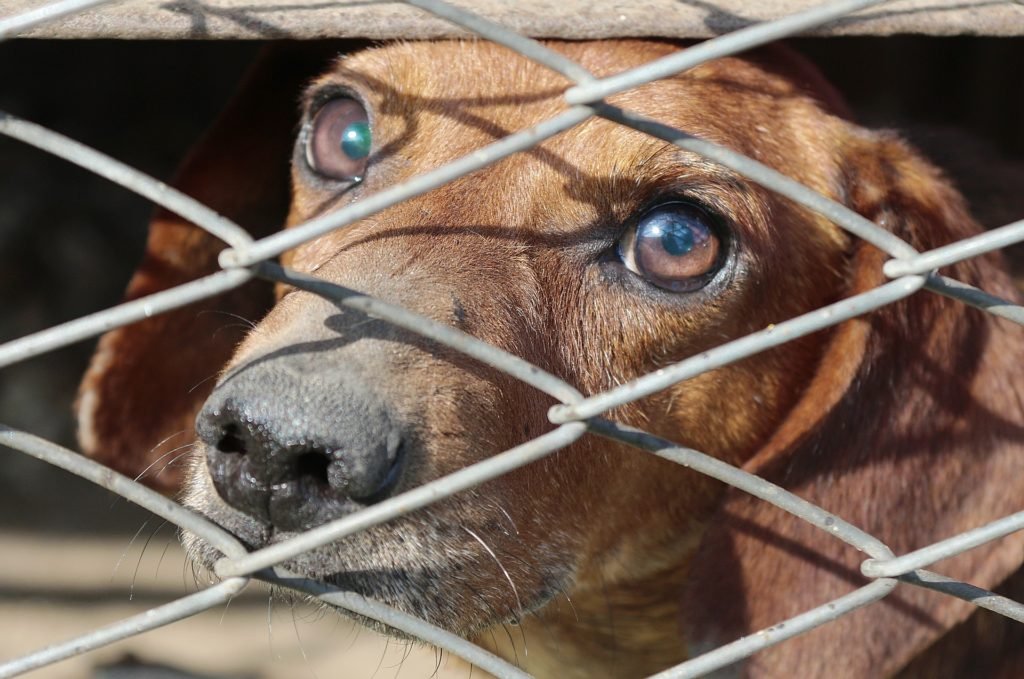
Dog in kennel, sad dog
Can any Government official ever be truly independent and stand up for their welfare and rights.

Many countries, cities and industries already have them.

Australia has shown some interest in the concept and there was a petition at one stage and Austria is one of the few countries which actually has an Animal Welfare Spokesman and an animals ombudsman service following a referendum there. Each State elects an independent, non-governmental representative and although not a perfect system it is pioneering in its intentions and beyond anything most counties have.

The City of Lisbon in Portugal appointed a ombudswoman for animal welfare in January 2018 who was reported to have made fast work of getting stuck into her job” by immediately announcing a plan to solve the overcrowding in the city’s dog pounds and making an appeal in Parliament for the country’s policymakers to create laws that better meet the needs of animals. At her swearing in ceremony she stated, I want to seize this opportunity to reach out to the population and raise awareness of the issue of animal welfare.

Back in 2014 the DPZ German Primate Centre in Göttingen, which houses 1300 research primates, appointed an “outsider” ombudswoman which the 43 animal keepers can go to with any welfare concerns instead of the in-house animal welfare officer and welfare committee. The fact that she is a scientist makes it debatable how impartial she is, but it shows that industry, science and governments are not averse to the idea of ombudsman or women.

Who could fulfil such a role and be truly independent?

It is definitely time for this nation of animal lovers to have an ombudsman or woman or commissioner, whichever you want to call the role, but we want a person with the power to consider and argue the rights and interests of the animals on their behalf and the legal power to defend this right in court or parliament if necessary otherwise the role has little meaning. Animals need an independent legal representative and a spokesperson with the ear of the Government to investigate suspect decisions, conflicts of interest and policies on the well-being of animals and if necessary instigate prosecutions of any institution that by its actions cause unnecessary suffering.

But any person who takes on the role must have the interests and rights of the animals as their first priority and will need to be able to withstand all the lobbying and economic considerations which presently impeded animals getting a fair deal. It is doubtful such a person would be considered as it is odds on we would end up with a scientist, a barrister, a politician, a businessman or an academic who will toe the line. Lets hope not.