Should animal welfare condone the dressing up of animals.
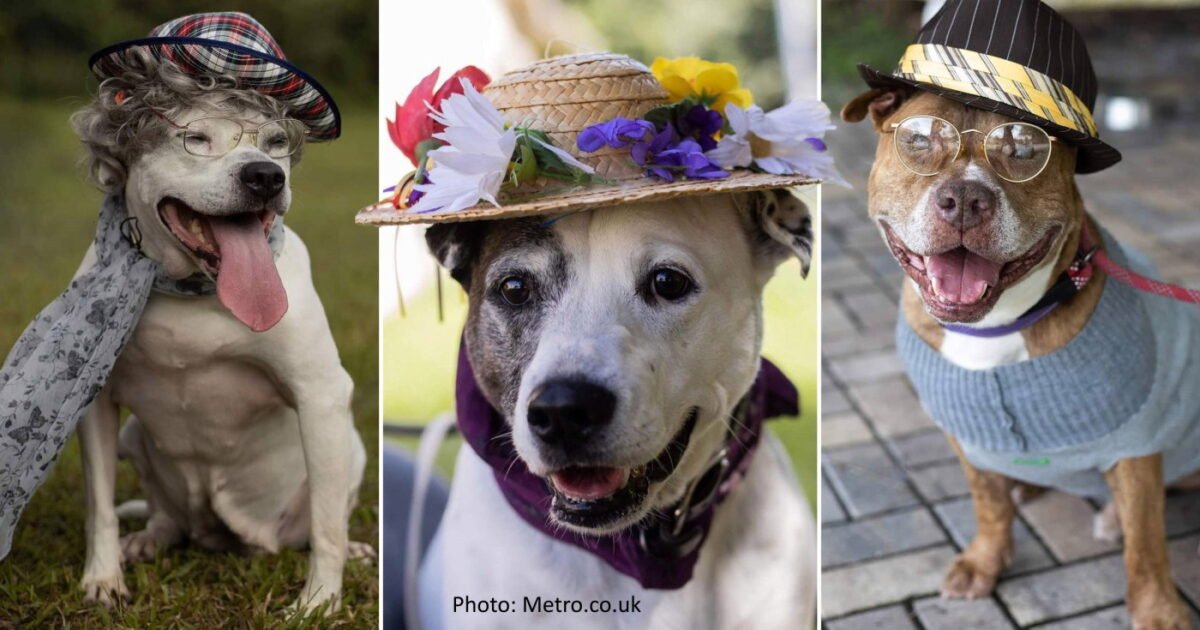
The Flagler Humane Society in Florida USA received worldwide coverage of their recent “creative” and “ingenious” scheme to find homes for three of their left behind elderly dogs by dressing them up as old people. Such an action raises the question of whether animal welfare organisations should be condoning dressing up animals and possibly sending out the wrong message to animal owners. Occasionally putting a hat and sunglasses on a pet as a bit of harmless fun or putting a jaunty bandana round a dog’s neck is arguably acceptable, but going to extremes is surely not a trait or habit that should be encouraged.
It is a constant problem for rescues, as I well know being a former animal home manager, to find new places for elderly dogs. Most people do not want the heartache of taking on an animal that may just live for a few years. Although it would be a perfect fit to match elderly people with aged dogs this is rarely possible or practical. This problem can cause desperation for many rescues in the search for these elusive homes.

Do we really need wigs, hats and sunglasses to make animals more homeable?
Surely though we are hitting a low point when Humane Societies and other rescues are reduced to dressing animals in wigs, hats, scarves and jumpers to get our attention. It doesn’t say much for our pet loving qualities when prospective owners only feel a dog becomes more worthy of a home when it suddenly becomes cute and adorable by wearing a hat and sunglasses.
Costumes for animals are big business for the pet trade, who have no interest in the ethical or welfare aspects of the trend, only the multi-millions they make out of our inane insistence to dress our pets up to make them look cute. Just because these outfits are available doesn’t mean we have to buy them or believe they are suitable or morally right. Very little thought is given to whether they may be uncomfortable, cumbersome, or even frightening.
Highlights the divide between animal welfare and animal rights.
The RSPCA and other welfare organisations as usual sit on the fence and guardedly warn against the practice while also giving tips and advice on how to ethically dress them up. Animal rights organisations, such as PETA, are obviously against the practice. Ardent animal rights advocates were probably horrified at an animal welfare organisation showing such little respect for the dignity of animals and their status. It is a classic example though of the often great divide between the philosophy of animal welfare and animal rights.
Although needs must and this “ingenious” stunt was successful, with the three dogs finding new homes, there must be a risk that it sends out the wrong message to all those who already paint the nails of their animals, buy bizarre outfits for them and pierce them. Perhaps our perceptions of acceptable behaviour towards animals is becoming rather skewed and if so, it is not a particularly edifying state of affairs.