Winter Visits to Zoos: A Depressing Experience

Visiting a zoo in winter is a depressing experience with a sense of desolation for both the animals and the visitors and adds to the animal’s monotony reducing their attention and interaction.

Walking through a zoo in winter is a depressing experience with a sense of desolation for both the animals and the visitors, something I discovered this December when suffering from the seasonal blues and feeling a desperate need to commune with wild animals I decided to venture into my local zoo for the first time. I am not a fan of zoos and in fact this was my first venture into one for over forty years but I was also  interested to discover if my poor opinion of them might have assuaged over the years.

Entrance to a zoo with directional signs pointing towards various animal exhibits, surrounded by trees and winter scenery.
A sunny December morning with few visitors – an atmosphere of emptiness and isolation. John Brookland

An atmosphere of emptiness

It immediately struck me as I wandered with a handful of other visitors, that the usually vibrant environment becomes subdued and silent during the winter months. An atmosphere of emptiness and isolation pervades, heightened by the shuttered cafes and ice cream stalls, which remain closed for the season. Wooden huts with empty outdoor enclosures only add to the sense of bleakness; empty because the cold discourages the animals from venturing out. They huddle inside under heat lamps in an effort to retain what little warmth they can find. Those few that did venture outside were desperately seeking out the infrequent patches of weak sunlight.

Two meerkats standing against a wall in their enclosure, basking in sunlight, surrounded by sparse vegetation.
Two lonely meerkats warm in the weak sunshine. John Brookland

It was soon obvious that reduced visitor numbers only adds to the animal’s monotony and contributes to them exhibiting signs of reduced attention and interaction, staring out with expressions of boredom, longing for stimulation and activity.  

As I wander I find a solitary leopard lazing quietly on a log surveying its enclosure and its eyes follow me with a haunted look. A lone female cheetah paces her grassy compound in a trance-like state, endlessly circling as if searching for something unattainable. Nearby, a magnificent male Bengal tiger sits perched atop a specially built wooden tower, wistfully gazing at the distant countryside before lethargically climbing back down and sauntering back inside.

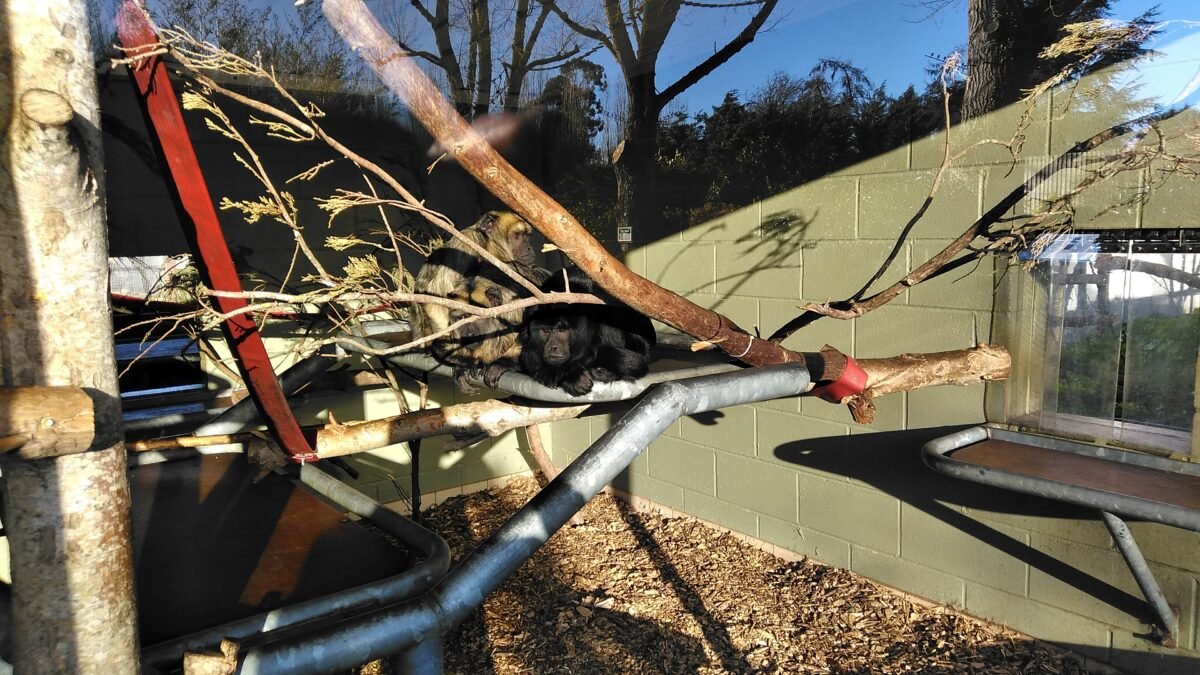
A trio of normally gregarious meerkats lean up against the wall of their pen in a sun spot looking dejected and without life. Three howler monkeys sit on top of each other for warmth and comfort with sad faces. They peer through the glass of their enclosure out of utter boredom and three baboons sit on a gantry to their outside pen, their watchful eyes and subdued behaviour highlighting the unfamiliar stillness that has settled over the zoo.

A black lemur sitting quietly on a ledge inside its enclosure, gazing wistfully outside through the glass.

And what of the staff who also seemed to pervade the same emotions and behaviour, unwilling to catch your eye or interact, as they hose down a yard or walk past;  perhaps also missing the bustle of throngs of visitors. All these behavioural changes underscore the impact of winter conditions on zoo inhabitants and operations.
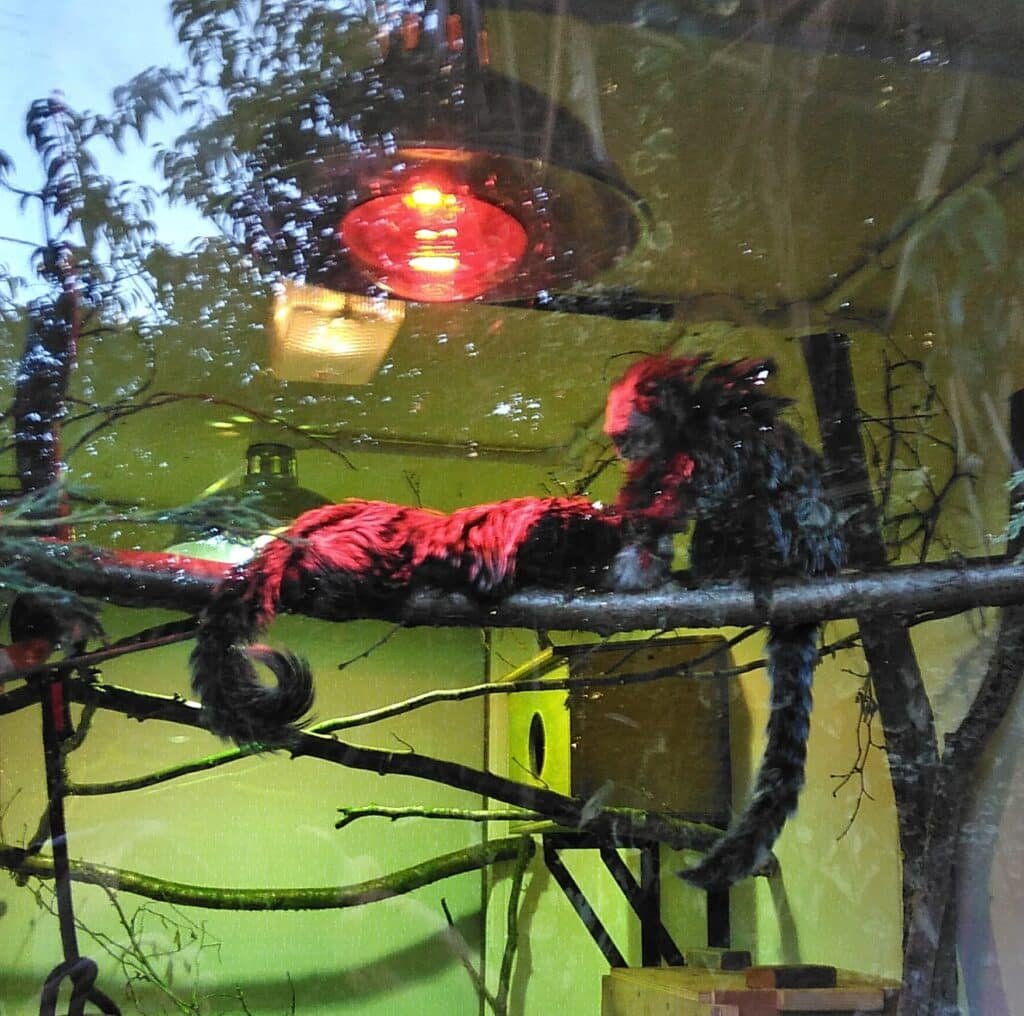
Two marmosets beneath a heating lamp to obtain warmth. Photo: John Brookland

Visiting a zoo in winter is a depressing experience with a sense of desolation for both the animals and the visitors and it is obvious that reduced visitor numbers only add to the animal’s monotony and contributes to them exhibiting signs of reduced attention and interaction, staring out with expressions of boredom, longing for stimulation and activity.  

Unfortunately I left the zoo with a realisation that my visit had done nothing to change my opinion of zoos having witnessed animals that bear no resemblance to their wild cousins who I have had the pleasure to observe on my travels.

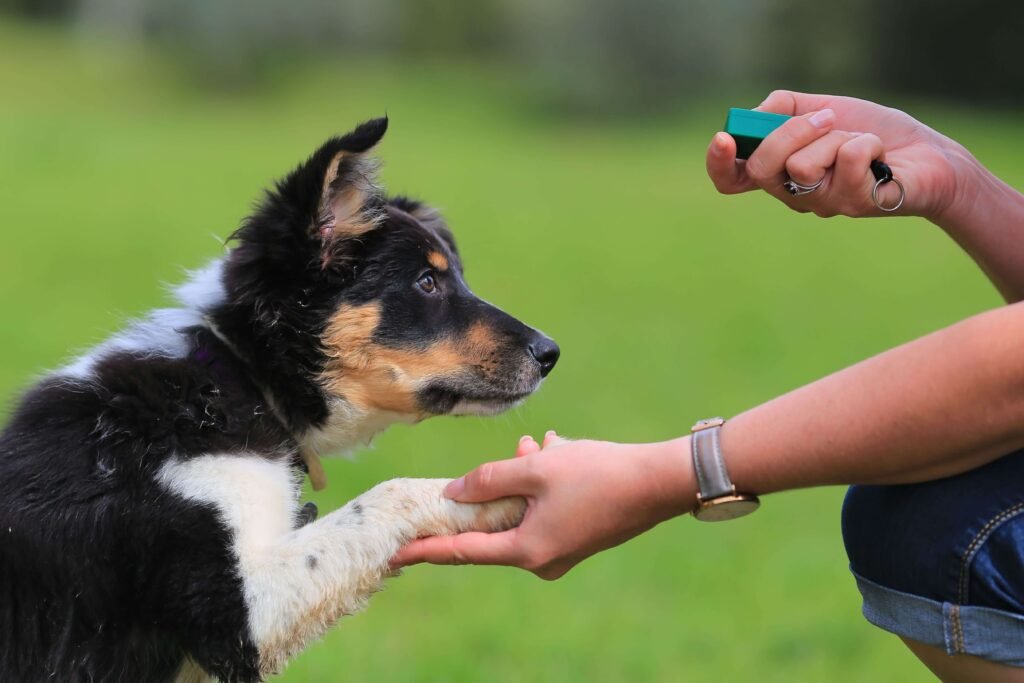
Dog Daddy. Yet another controversial showman dog trainer making money.

The Dog Daddy aka Augusto DeOliveira, is yet another in a long list of showman dog trainers who pop up from time to time and court controversy in order to gain celebrity and at the same time make huge sums of money out of gullible dog owners and followers. Dog training is big business and very lucrative and totally unregulated in most countries. Wherever their is money to be made there will always be someone to take advantage of it.

Dog training is big business and lucrative.

He is young, good looking, has chosen a catchy moniker, knows how to capitalise social media, surround himself with hype and garner millions of followers worldwide, particularly the young. He swaggers about in designer clothes and sunglasses having photographs with the usual celebrity clients and poses outside designer shops. He will be a multi-millionaire in no time, if not already. It is just about presentation and hype. Basically the dogs are just props for his huge marketing campaign.

Like other controversial trainers before Dog Daddy there are moves to ban him from the U.K. and there is a Change.org petition with this intent at the moment. He was due to hold training sessions at secret locations recently but these were cancelled probably partly because of protests from the RSPCA, the British Veterinary Association, The Kennel Club and many others.

Dog clicker training v Dog Daddy methods

But what of Dog Daddy methods.

His methods are nothing new particularly in America: using prong collars, stringing up dogs, yanking and dragging them harshly and poking them. Despite his suspect methods owners willingly to offer up their sacrificial dogs for punishment.

Celebrity trainers come and go. Back in the 1970’s and 1980’s we had the highly celebrated Barbara Woodhouse in the U.K. and across the world, probably the mother of this brand of dog trainers. She made a good living and fame from her TV programmes, books and documentaries about her methods. This was mainly because of her perceived eccentricity which always makes good TV. She was regarded by many dog owners as a saviour and by others as heavy handed and cruel with her domineering methods.

Another more recent example was American showman dog trainer Jeff Gellman who was accused of hitting dogs with a rolled up towel and uses prong collars and remote control shock collars to keep dogs in line. The use of such instruments of torture are much used in North America and are readily available on the internet in the U.K. His YouTube videos and live appearances garnered him wealth and fame and followers who queued up willing to pay large sums of money for a session with him.

The argument over negative and positive reinforcement.

We now live in a world of dog behaviourists, clinical animal behaviourists, psychiatrists, counsellors and a variety of trainers to make dogs compliant and contented with our modern lifestyles. All because as owners we have made them nervous wrecks in one way or another.

The methods used by Dog Daddy and his ilk highlight the great division that still exists after decades of research and debate regarding the best and most humane way of training a dog to fit in with our modern lifestyles. Every self proclaimed dog behaviourist and trainer has their own ideas. But then everybody likes to think they are a dog expert.

“Experts” have long disagreed over the two main variants of training: “Aversive” or “negative reinforcement” training favoured by most showman trainers utilises brute force but is viewed as counter productive and stresses dogs, compared with “positive reinforcement” where dogs are bribed with treats and praised to toe the line. Whether any of this is scientifically sound or not, common sense dictates that hitting, yanking and electrocuting dogs is probably not the most humane course of action.

You can beat humans and enslave or make them submissive with the right methods but it doesn’t mean the method is right or acceptable.

Genuine and sincere dog trainer or another showman – you to decide.