Winter Visits to Zoos: A Depressing Experience

Visiting a zoo in winter is a depressing experience with a sense of desolation for both the animals and the visitors and adds to the animal’s monotony reducing their attention and interaction.

Walking through a zoo in winter is a depressing experience with a sense of desolation for both the animals and the visitors, something I discovered this December when suffering from the seasonal blues and feeling a desperate need to commune with wild animals I decided to venture into my local zoo for the first time. I am not a fan of zoos and in fact this was my first venture into one for over forty years but I was also  interested to discover if my poor opinion of them might have assuaged over the years.

Entrance to a zoo with directional signs pointing towards various animal exhibits, surrounded by trees and winter scenery.
A sunny December morning with few visitors – an atmosphere of emptiness and isolation. John Brookland

An atmosphere of emptiness

It immediately struck me as I wandered with a handful of other visitors, that the usually vibrant environment becomes subdued and silent during the winter months. An atmosphere of emptiness and isolation pervades, heightened by the shuttered cafes and ice cream stalls, which remain closed for the season. Wooden huts with empty outdoor enclosures only add to the sense of bleakness; empty because the cold discourages the animals from venturing out. They huddle inside under heat lamps in an effort to retain what little warmth they can find. Those few that did venture outside were desperately seeking out the infrequent patches of weak sunlight.
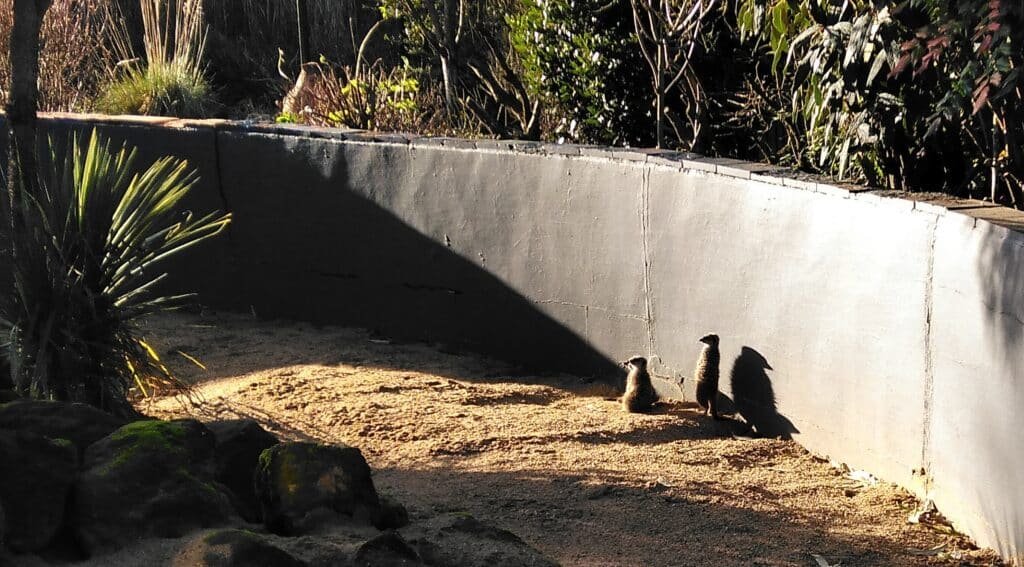
Two meerkats standing against a wall in their enclosure, basking in sunlight, surrounded by sparse vegetation.
Two lonely meerkats warm in the weak sunshine. John Brookland

It was soon obvious that reduced visitor numbers only adds to the animal’s monotony and contributes to them exhibiting signs of reduced attention and interaction, staring out with expressions of boredom, longing for stimulation and activity.  

As I wander I find a solitary leopard lazing quietly on a log surveying its enclosure and its eyes follow me with a haunted look. A lone female cheetah paces her grassy compound in a trance-like state, endlessly circling as if searching for something unattainable. Nearby, a magnificent male Bengal tiger sits perched atop a specially built wooden tower, wistfully gazing at the distant countryside before lethargically climbing back down and sauntering back inside.

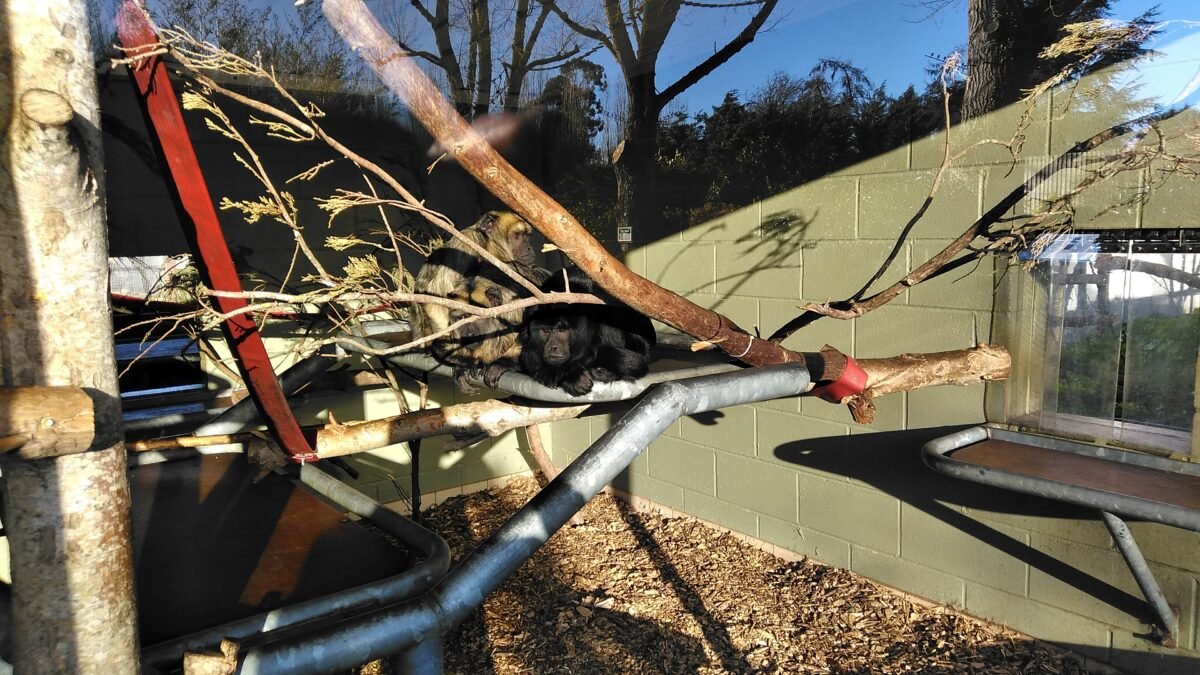
A trio of normally gregarious meerkats lean up against the wall of their pen in a sun spot looking dejected and without life. Three howler monkeys sit on top of each other for warmth and comfort with sad faces. They peer through the glass of their enclosure out of utter boredom and three baboons sit on a gantry to their outside pen, their watchful eyes and subdued behaviour highlighting the unfamiliar stillness that has settled over the zoo.
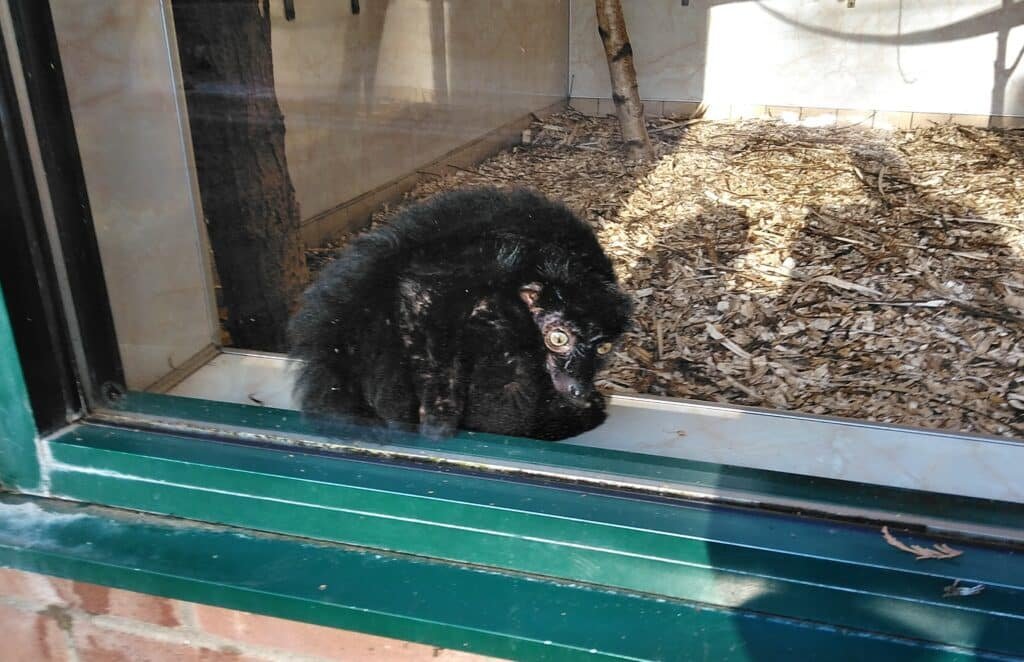
A black lemur sitting quietly on a ledge inside its enclosure, gazing wistfully outside through the glass.

And what of the staff who also seemed to pervade the same emotions and behaviour, unwilling to catch your eye or interact, as they hose down a yard or walk past;  perhaps also missing the bustle of throngs of visitors. All these behavioural changes underscore the impact of winter conditions on zoo inhabitants and operations.
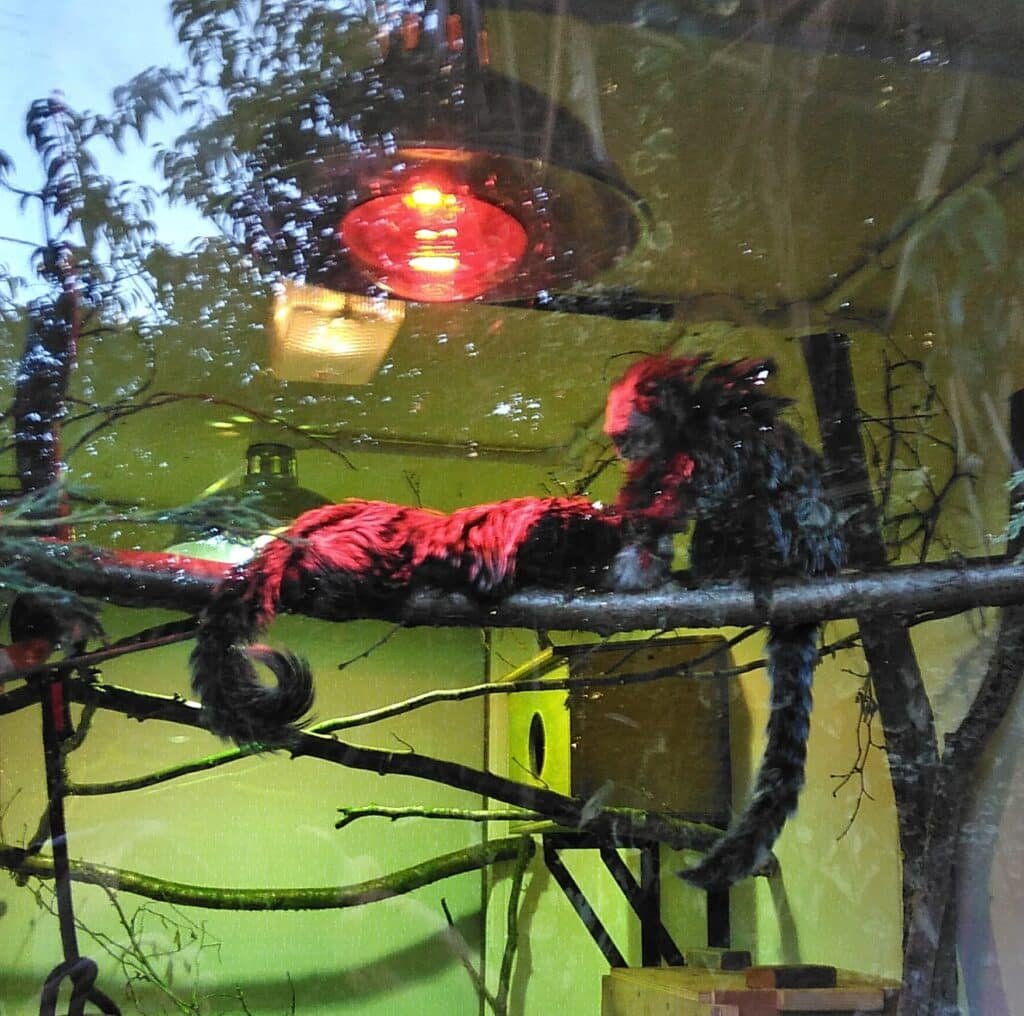
Two marmosets beneath a heating lamp to obtain warmth. Photo: John Brookland

Visiting a zoo in winter is a depressing experience with a sense of desolation for both the animals and the visitors and it is obvious that reduced visitor numbers only add to the animal’s monotony and contributes to them exhibiting signs of reduced attention and interaction, staring out with expressions of boredom, longing for stimulation and activity.  

Unfortunately I left the zoo with a realisation that my visit had done nothing to change my opinion of zoos having witnessed animals that bear no resemblance to their wild cousins who I have had the pleasure to observe on my travels.
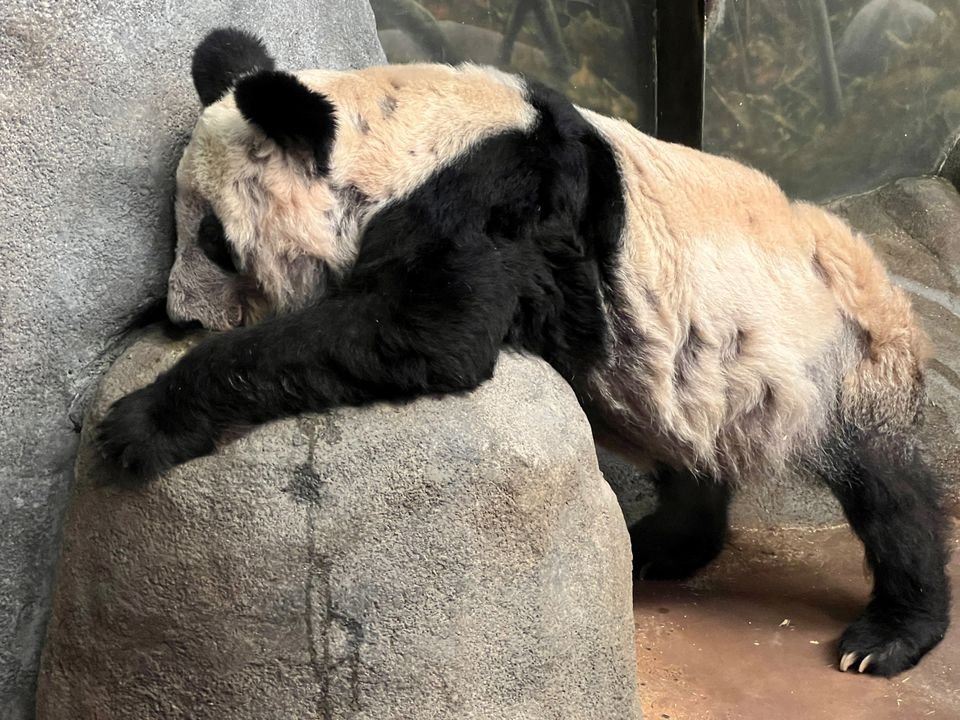
Giant Pandas for rent. No way to treat a vulnerable species.

China has been renting out Giant Pandas for decades at astronomical fees. The sorry state of Ya Ya and Le Le are the result.

In December 2022, Memphis Zoo returned two sorry looking aged Giant Pandas named Ya Ya and Le Le back to their homeland to great fanfare and publicity. According to the zoo Ya Ya and Le Le helped “pioneer research and conservation projects” and drew visitors to Memphis to “get a small taste of the exquisite culture of the People’s Republic of China.”

But according to several animal advocacy groups the zoo had not been providing them with adequate food or enough outdoor freedom and cited instances of them pacing in circles. These groups had been criticising the zoo for months and have claimed victory now that they are being returned to China. But it would appear their return may have been more to do with their contract expiring. And what are they returning to?

Giant Pandas Ya Ya and Le Le
The poor old pandas being airlifted home

What future for Ya Ya and Le Le

At 24 years old and 22 years old respectively, having already exceeded the usual life expectancy by a considerable amount, Ya Ya and Le Le may not have much of a future. Not to mention the stress of being uprooted and flown round the world.

Few people realise that Giant Pandas are “rented” out by China. After the Second World war China was in the habit of “gifting” Giant pandas to other countries as part of trade agreements and diplomacy and zoos would clamour to house them. But in 1984 China changed this policy and began leasing them for high monthly fees. This changed again in 1991 to ten year leases costing up to US$1 million dollars per year with any cubs born having to be returned to China.

Some cynics have suggested that the Giant Panda is used as a “strategic asset for geopolitical reasons” because of the many trade agreements coinciding with their arrival in a country. The Pandas at Edinburgh coincided with a £2.6 billion worth of trade contracts for Britain. Zoos in France, Canada, Australia, Malaysia and Thailand also received Pandas following trade agreements.

Giant Pandas can assure a zoo’s financial future

They always come in pairs and the zoos pray they will breed as any cubs born boost their visitors and make them tens of millions in revenue. Any cub born costs the zoos a further “baby tax” until they are returned to China for breeding at 2 to 3 years old to support a healthy gene pool. In 2012, Toronto Zoo paid the going price of $1 million per annum for a pair and they produced two cubs which resulted in visitor numbers shooting up.

Edinburgh zoo rented a pair in 2011 named Yang Guang and Tian Tian with a contract costing £600,000 a year and they must be returned at the end of  this agreement. Not that the zoo was too worried about the investment as visitor numbers shot up by 4 million in the first two years at £16 plus a head. This contract was extended by two years because of Covid and they are due to go back in 2o23.

The crowds tend to have a habit of losing interest if a cub is not born to reinvigorate the attraction, but luckily a cub was born in 2017 to much excitement and media coverage and probably to the relief of the zoo’s accountants.

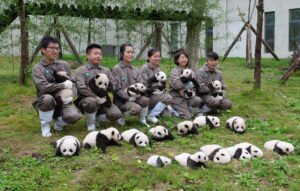
Giant panda cubs lined up in China breeding centre
Bred for what?

Captive numbers have increased, but for what?

The number of wild and captive Pandas has increased to over 2,000 and the International Union for the Conservation of Nature (IUCN) have downgraded their endangered species label to “vulnerable”, but this does not mean that they are plentiful in the wild or will ever be, as there is very little room in suitable habitats for their release.

China (and of course the zoos they have been rented to) has bred and reared over 400 giant pandas and love to show off all the cute babies to world acclaim, but allegedly only 10 have ever been released into the wild since 1983 and only two of these have survived which appears to make a total nonsense of breeding them for release.

The bottom line seems to be that Giant Pandas have been reduced to tradeable merchandise.