Finn’s Law – better late than never.

Finn’s law came into force in June, 2019
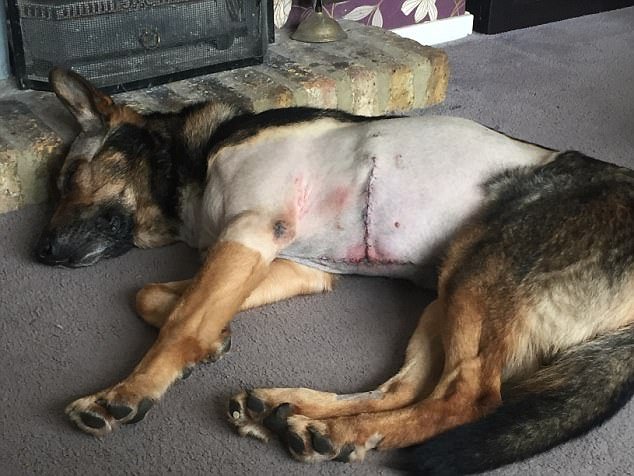
Injured German Shepherd with stab wounds.
Finn the police dog with stab wounds to head and chest soon after major surgery to save his life.

Why did it take so long to protect UK police dogs and horses with Finn’s Law.

Until recently police dogs and horses have always been treated just as a piece of police equipment or property. Countries have been extremely slow at recognising the need to protect them and it has often taken too many tragic incidents and thwarted campaigns to force lawmakers to do so. The UK, the great nation of animal lovers, has followed its usual path in lagging behind other countries in protecting service animals and like most countries has only done it through public pressure.

New Zealand has protected its police dogs since 2008 with the Policing Act 2008 (Killing or injuring Police Dogs) and has recently increased the punishment under the Policing (Killing a Police Dog) Amendment Bill 2016 to 5 years in line with many other countries and 2 years for injuring a dog plus a NZ$15,000 fine.

The USA has had protection in place since 2000 under the Federal Law Enforcement Animal Protection Act with up to 10 years in prison and a $1000 fine for assaulting, maiming or killing federal law enforcement dogs and horses following many attacks on them and drug dealers putting bounties on narcotics sniffer dogs, but State laws vary.

Police dog handlers have to fight for the rights of their dogs.
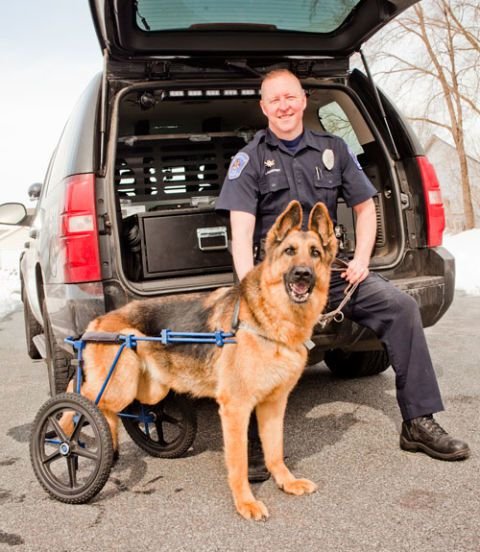
Finn's Law. Injured police dog
Major the police dog paralysed in a stabbing with his handler, Officer John Jorgensen.

On the 12th. November, 2010 in Roseville, Minnesota, USA, Officer John Jorgensen sent  his police dog Major into a wooded area to chase after intruders and within minutes he found Major covered in blood and rushed him to the vet where he was found to have suffered four stab wounds puncturing the lung and damaging the spinal cord resulting in permanent paralysis of his hind legs. Although it was a felony to kill a state police dog, assaulting one was treated at the time as a mere misdemeanour so the attacker only served 4 months. The officer was so appalled at the lack of protection of his partner that he began a campaign for more stringent laws in the State which he succeeded in.

In August 2013 in Adelaide, South Australia a police dog named Koda was  stabbed in the chest in the line of duty when he caught up with a knife-wielding man following a burglary. He was stabbed in the chest causing a 8 c.m.-deep wound and was rushed to a vet where he underwent emergency surgery and survived.  The incident was greeted with public outrage as no law existed to prosecute the offender and following a campaign a new law, known as “Koda’s Law” was introduced.
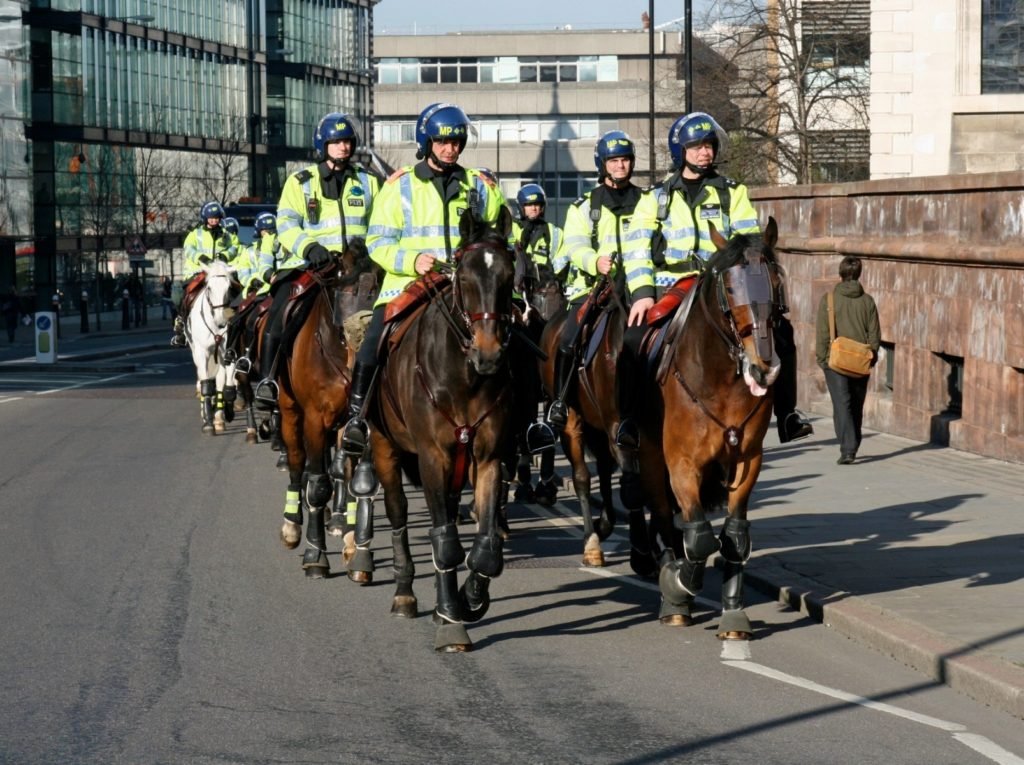
Finn's Law. Police horses wearing eye and face shields and leg protection.
We are already having to kit police horses out with protective gear to avoid injuries.

On the 5th. October, 2016 in Stevenage, Hertfordshire, UK a 16-year-old boy stabbed a police dog named Finn in the chest and head causing life threatening injuries, but he survived following surgery and weeks of treatment. It sparked outrage and there was a campaign, including a website and Facebook page for Finn, involving his handler PC Wardell to enact a law to protect them , something that should have been included under the Animal Welfare Act back in 2006 but was either overlooked or not felt necessary.

UK Government slow to introduce Finn’s Law and come to the rescue of police dogs and horses.

A petition was launched which stated “I propose that UK police dogs and horses be given protection that reflects their status if assaulted in the line of duty. This would be similar to the US Federal Law Enforcement Animal Protection”, but prior to the petition being debated the Government responded by saying “It is unnecessary to give police animals the same legal status as officers in light of the penalties already in place”. This was not helped by a delay caused by Sir Christopher Chope MP who unbelievably objected to the new proposed law.  Such is the UK’s commitment to animal welfare.

Despite this a new amendment, the Animal Welfare (Service Animals) Amendment, to the Animal Welfare Act, which has been dubbed “Finn’s law,” was finally  debated by the Lords and came into force on 7th. June 2019. It is obviously better late than never but it seems sad that we haven’t found it necessary to help our police dogs and horses much sooner.

Is it time to reduce the usage of animals on front line duties?

Having such a law is obviously to be applauded, but it is not unfortunately going to solve the problem of attacks on police animals in the future and brings into focus the danger we put these animals in on our behalf. It raises the question of whther it is ethically and morally fair to intentionally put animals in harms way in the first place?  Would it not be better to restrict them to ceremonial use or purely as “search” and “sniffer” dogs who appear to have a fun time at work.

Updated June 2020
What is Zoonasia?

We seem to have little knowledge or understanding of the secret world of ‘disposal of genetic surplus’ or in layman’s terms – the euthanasia of zoo animals not suitable for breeding in the opinion of science.

Cruelty to zoo animals, zoonasia, zoo lions,
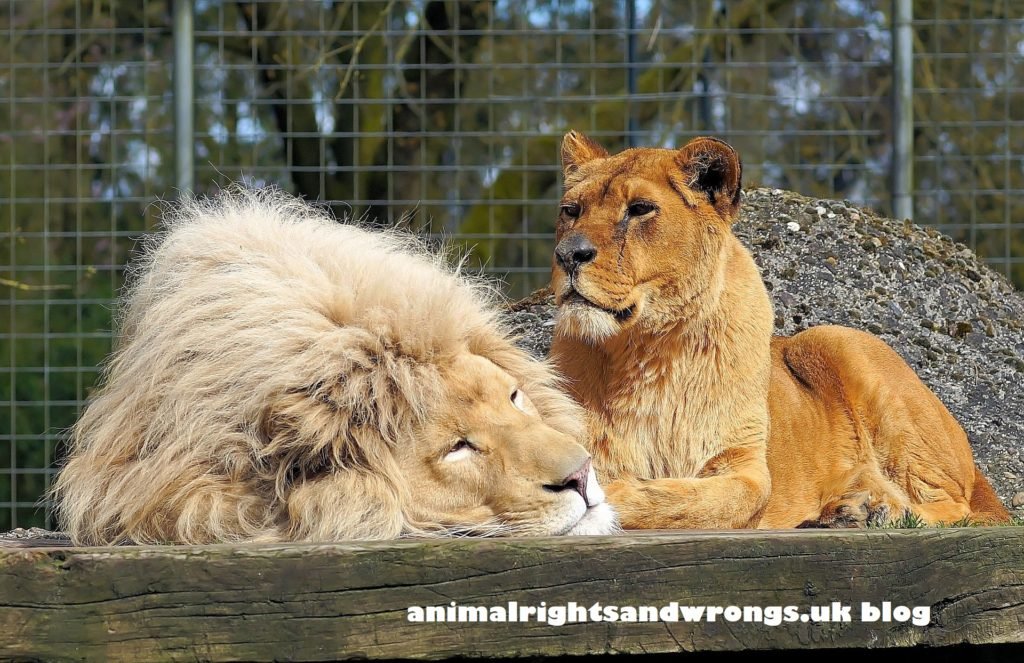
Iconic zoo animals are often killed as surplus to requirements.

The declared dogma of most reputable zoos is that of a scientific and research emphasis based on doing everything possible to save species from extinction by any means possible. Most of this work operates behind the scenes and therefore is not entirely understood by the public and many of us may feel uncomfortable about what is involved in saving species.

In many ways the modern-day ‘professional’ zoo can almost be likened to a research laboratory where they use a team of veterinarians, scientists and researchers to carry out their breeding programmes, but when such professionals become involved in ‘saving’ or ‘rescuing’ species, the rights, welfare and interests of the individual animals become less important  and sometimes lost.

Jens Sigsgaard, a zoologist at Aalborg Zoo in Denmark puts it this way: ‘Our function is not to keep an individual animal alive, but to keep the species alive’.

Zoonasia explained

A major problem for zoos is maintaining a good gene pool of unrelated animals from a dwindling supply of captive animals and avoid inbreeding. This is done by constantly exchanging animals around the world’s zoos, but the difficulty is that it is impossible to breed to order. Therefore  the process of maintaining stocks of endangered and iconic animals for ‘future generations’ involves collateral damage in the form of “surplus” animals.

Iconic animals such as lions and tigers that help pull in the crowds are constantly overbred or are born the wrong sex and become liabilities as do many endangered species if they do not meet the requirements of a breeding program. An estimated 3-5,000 zoo animals are killed each year in the UK, although reliable figures are difficult to obtain or substantiate due to the obvious reluctance to divulge such information. Killing these animals is known in the trade as ‘Zoonasia’. This carnage appears to go mostly unnoticed by the public and even when highlighted is soon forgotten.

Zoos promote a caring public face by giving animals names to make our visits more personal and they are happy to show off expensive natural enclosures, state of the art veterinary care and top-quality diets, but the zoo professionals have a strange detachment when it comes to killing surplus animals.

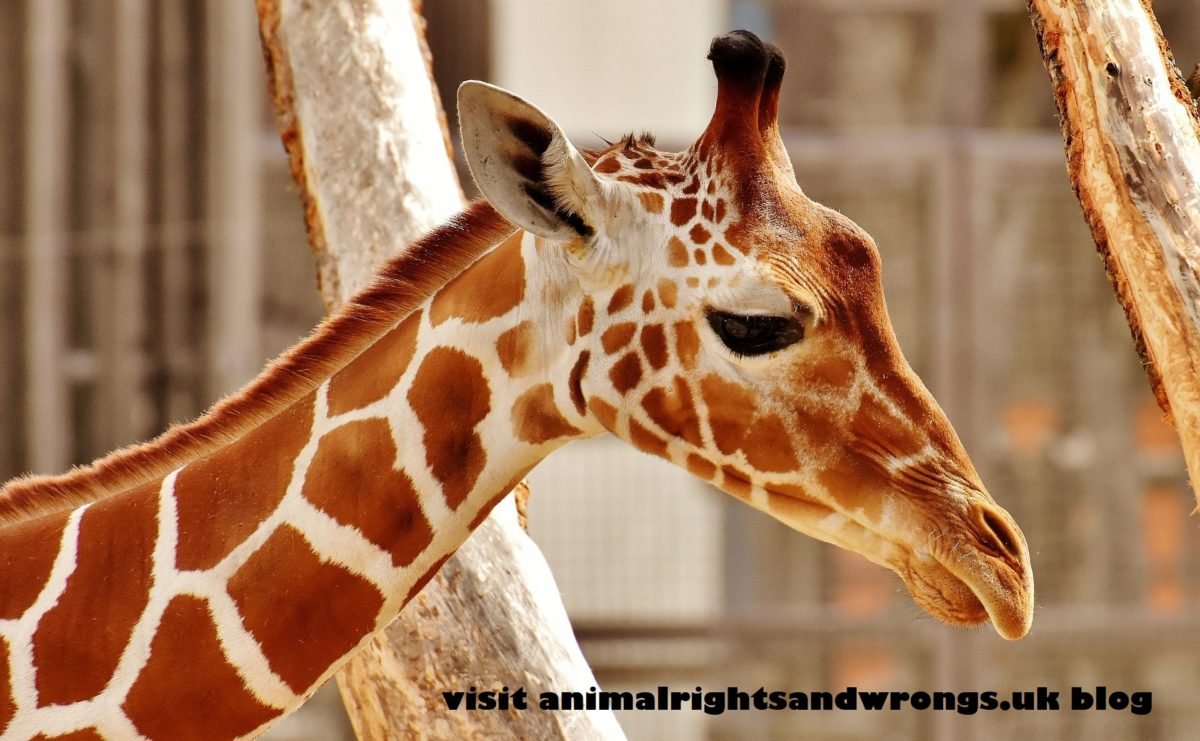
The case of Marius the Giraffe

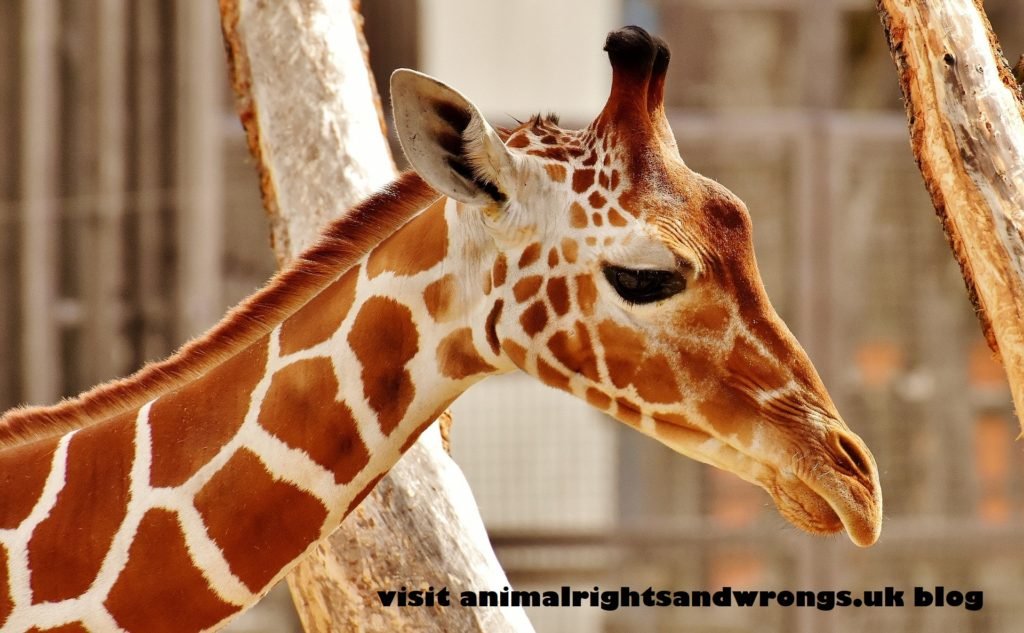
This subject came to public attention in 2014 with the story of a two-year-old male giraffe named Marius who was killed at the Copenhagen Zoo  by their veterinarian Mads Bertelsen, DVM, DVSc. He then dissected Marius in front of cameras and families with young children on the pretext of education after which his remains were fed to the zoo’s lions.

Zoonasia, zoo animal culling, cruelty to zoo animals
Young zoo animals can find themselves surplus to requirements if they are born the wrong sex.

That same year the zoo killed  four of their lions and dissected a beautiful Sable antelope. The zoo was unrepentant despite worldwide outrage and couldn’t understand what the fuss was about. Bengt Holst, the Director of Research and Conservation was surprised at receiving death threats and a petition to sack him. The zoo not only upset the public, but the zoo profession in general, as they were not best pleased that their relatively secretive activity of culling animals was made so public. The zoo explained their reasoning in this way:

“The side effect is that we have a surplus of animals. It is in fact fortunate that we can use them as food. Instead of killing 20 goats or a cow, we can use the giraffe,” says Mads Frost Bertelsen. Zoo Veterinarian.

Mads Bertelsen, had apparently regularly carried out research on giraffes over the years for their ‘benefit’ and had dissected ‘a large number of surplus giraffes to investigate their cardiovascular anatomy using state-of-the-art methodology.

Jens Sigsgaard, a zoologist at Aalborg Zoo, Denmark was quoted as saying that surplus animals are already dead biologically speaking in the sense that they do not contribute to the next generation’. Only a scientist could refer to animals in this way.

All this is being done on our behalf to save animals for future generations of mankind and for a mythical time when the animals are released back into the wild. But will future generations be that interested as there are few if any wild animals existing already and most people do not seem that worried.

At least one zoologist, Liz Bonnin, has declared that it might be time to close zoos down as they no longer serve any purpose only to entertain and charm the public and has commented: ‘They’re [Giraffes] sentient, emotionally intelligent, cognitively gifted animals that deserve a better quality of life. It’s shameful that we scoff at anybody who raises the issue of animal welfare’.