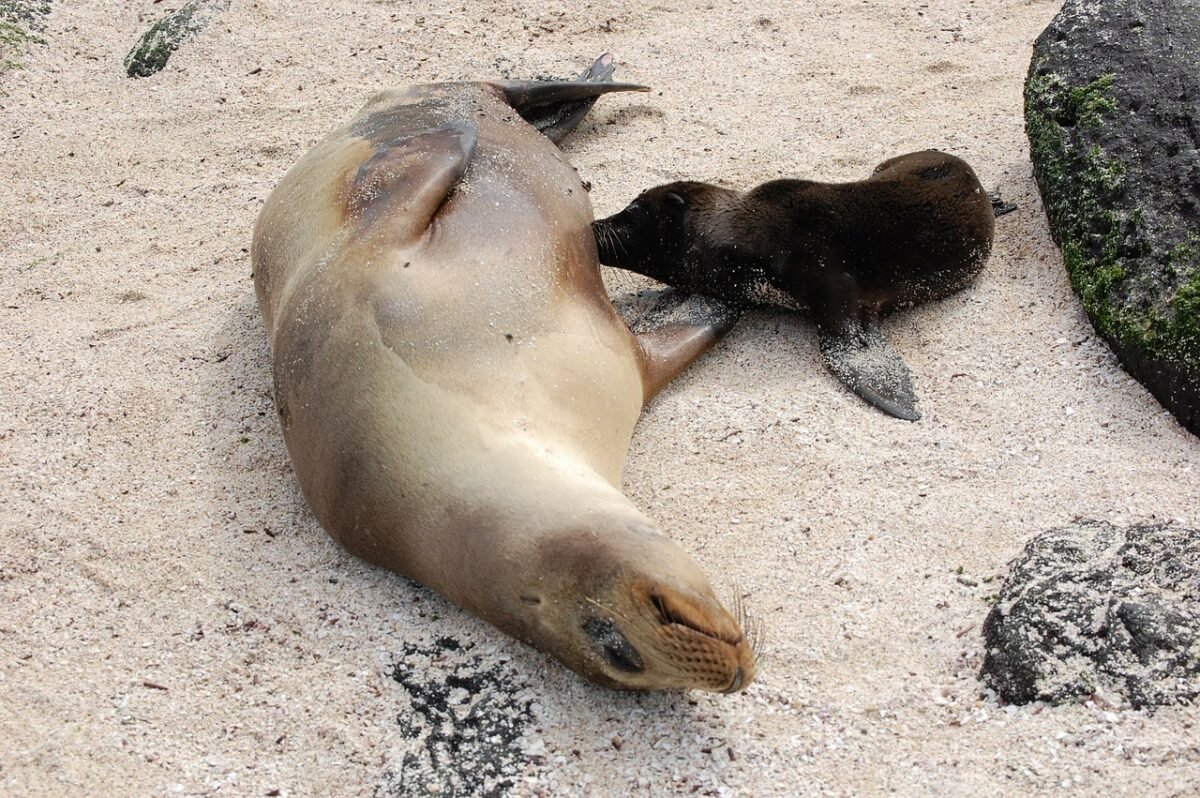
Killing wild animals by our crass behaviour

We are killing wild animals by our crass behaviour and because of our ignorance of how to act around them.

Too many people are ignorant of how to act around wild animals.

We are killing and stressing wild animals by our crass behaviour and ignorance of how to act around them. We cannot resist our fascination with getting close to wild animals regardless of the consequences to the animals concerned.

On beaches near where I live there are colonies of seals and recently in the space of three days one seal pup which wasn’t weaned and too young to have a waterproof coat, was chased into the water by two young children where it drowned while the children’s mother watched proudly on.

Another was abandoned by its mother when it was surrounded by a crowd of noisy onlookers taking selfies. A third was attacked and killed by an unleashed dog whose owner either didn’t care or was unable to control the dog properly off a lead.
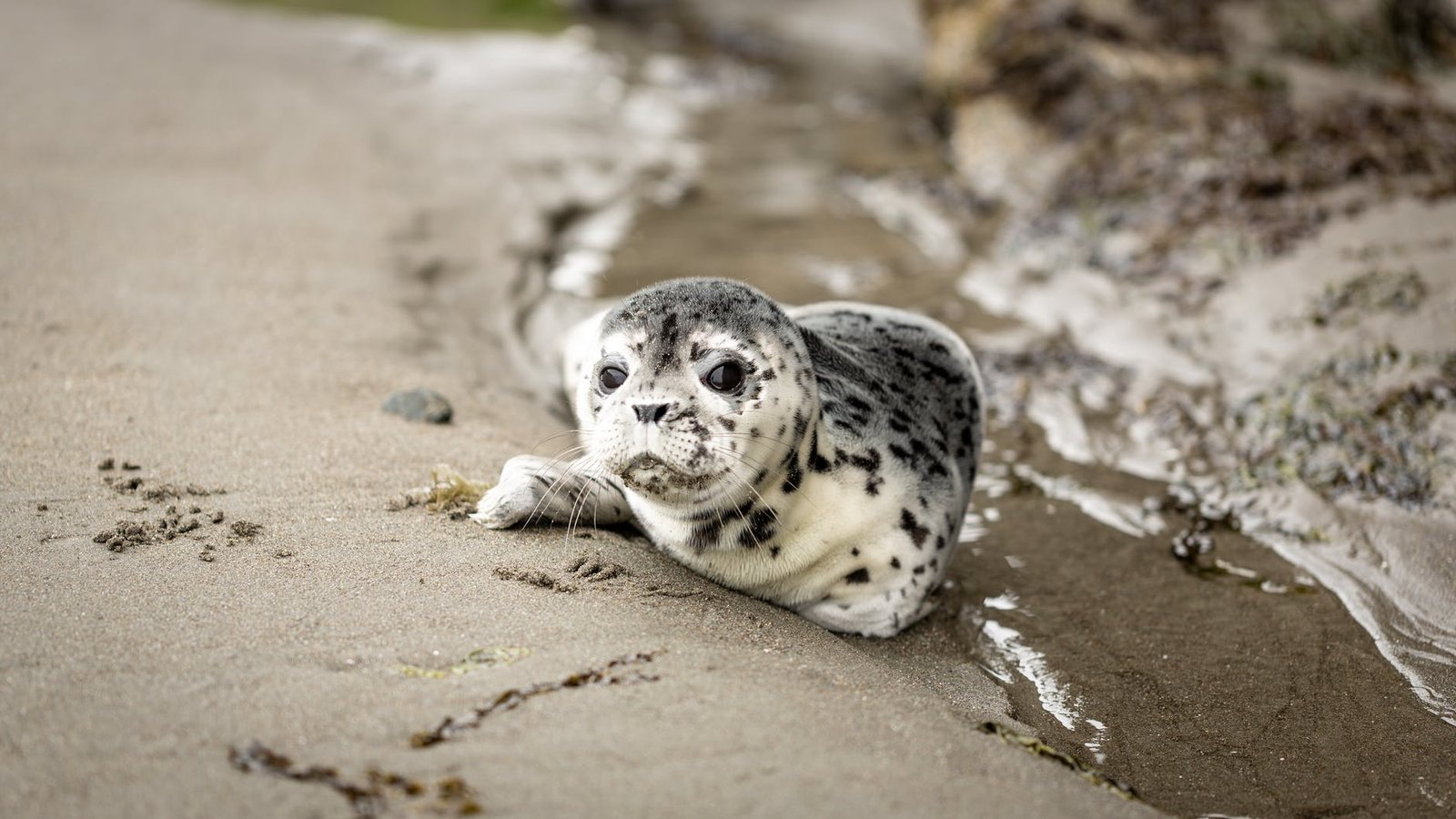
white and black seal on shoreline
Photo by Ruvim Miksanskiy on Pexels.com

Every year this happens because they have become an “attraction” and inconsiderate visitors ignore warning signs and the voluntary beach wardens who advice people not to go close to the seals or try to move people on that have.

Criminal offence to cause the death of a wild animal.

Few if any people are aware or care that it is a criminal offence in the UK to cause the death of a protected species, not that many will even know what a protected species is.

Sadly, it is not just wild animals. I once watched two young children chasing ewes around a farmers field while their parents encouraged them finding it amusing. I had to intervene pointing out that if their children were dogs they could have been shot. Children have a natural impulse to either chase after or throw something at any animals they come across whether it is seagulls on the beach or ducks and pigeons in the park and unless guided by their parents that this unacceptable behaviour and explain why, their children will never see the harm in it. But the problem is that many parents have little understanding themselves.

Dog owners to blame also.

Dog owners are just as much to blame as well and many are happy to see their beloved dogs having fun chasing after any animal that moves and destroying habitat. I was once engrossed looking into pond in a nature reserve full of pondlife when two Labradors plunged in and turned it into a mud bath. The owner was not concerned in the least. Chasing animals or disturbing them appears to be a recreational sport to some and yet they would probably object to hare coursing or sheep worrying.
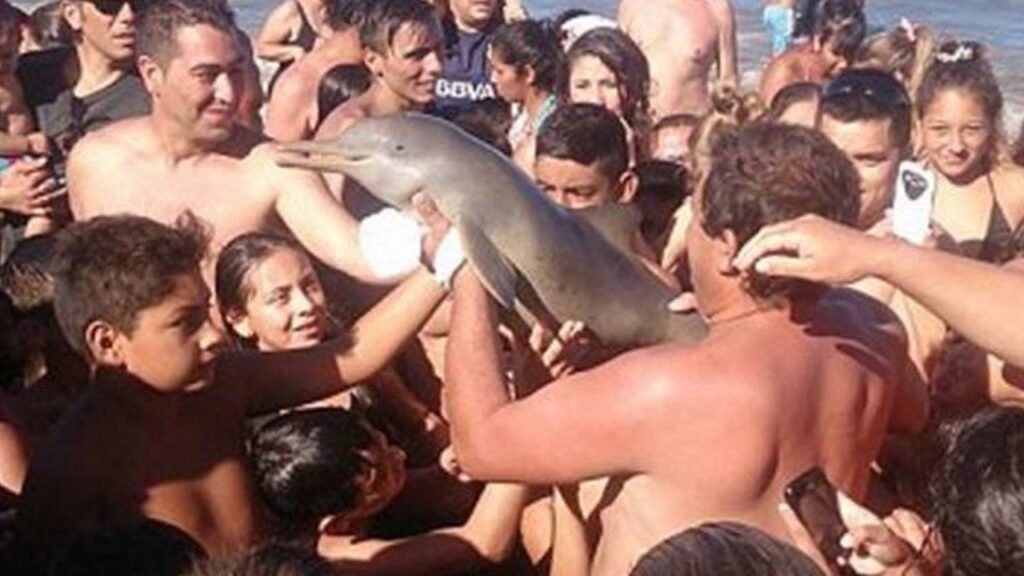
Tourists on a beach manhandling a dolphin

This human intervention as it is often called, or ignorant and crass behaviour, is a worldwide problem. The smiles on the faces of the holidaymakers on the beach and these on a Costa Rican turtle egg laying beach are more proof of this behaviour. Some of the adults and their children were witnessed posing and riding on their backs.
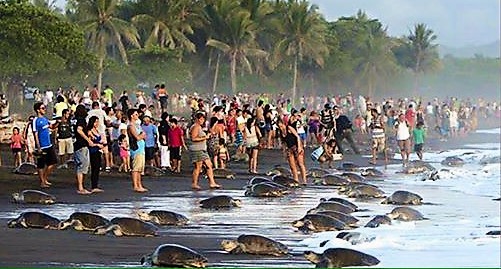
Disturbing nesting turtles

The problems arise when the animals cannot escape or are forced to abandon their dependents. No wonder most wildlife runs for the hills when they see humans approaching. Meanwhile back at the seal colony in Norfolk they are building a 1.2 km. fence at considerable cost to protect the seals from us and our pets.
Related articles:

RSPCA ending private prosecutions of animal cruelty offenders.

But RSPCA will seek statutory powers under the Animal Welfare Act.

The RSPCA has recently announced that they are withdrawing from their prosecuting role by ending private prosecutions of animal cruelty offenders as part of their new Together for Animal Welfare 2021-2030 Strategy Plan. Considering that they instigate 95% of all the prosecutions taken under the Animal Welfare Act 2006 this leaves quite a vacuum to fill particularly when the police and government have relied on them for so long to do this work for them.

This decision, although not stated, is no doubt influenced by the fact that it costs tens of millions of pounds to take these actions and the Covid-19 pandemic has restricted their funds to the point where they have made hundreds of staff redundant and closed many of their facilities.

This announcement will please many MP’s, judges and certain sections of the legal profession who have long been uncomfortable about the RSPCA prosecuting and have repeatably campaigned to stop them. In 2016 the Commons environment, food and rural affairs committee said the charity should only bring cases to court in exceptional cases. And it will of course be of great news and a relief to all those involved in animal abuse.

RSPCA inspectors will continue to investigate.

But the RSPCA are pointing out that their inspectors will “still be rescuing, investigating and collecting evidence of cruelty and abuse and seeking to hand this over to the CPS and we would like to reassure the public that we would not step back from the role of prosecuting unless we are assured that the CPS has the commitment, the resources, and the expertise to make sure that animals continue to get the justice they deserve.

The use of the word seeking does not give much confidence that the over stretched Crown Prosecution Service (CPS) and the Police will give much priority to animal welfare prosecutions  There is also scope for a great difference in opinion and interpretation between professional legal minds and empathetic animal welfare professionals as to what cases should be subject to prosecution which will result in a low priority being given to animal welfare cases. At the moment the CPS do not seem that keen on the idea.

Will cases ever reach the courts without the RSPCA

On the surface this all seems rather alarming for the future welfare of English and Welsh animals but confusingly the RSPCA have also stated that “We will work with governments in Westminster and Cardiff to achieve statutory powers for our inspectors under the Animal Welfare Act 2006”. This means that they will endeavour to persuade the Governments to give their inspectors similar powers of entry and seizure as the Police and local authority inspectors.

This blog has pointed out many times before that other countries like Australia, New Zealand and  the USA have successfully given such powers to animal charity officers, but the RSPCA have always been very tentative on this subject before because of paranoia in the media and a backlash from the legal profession. In 2015 they stepped back from prosecuting hunting because they feared media attention would affect their reputation.

The Government recently raised the maximum punishment for animal cruelty to 5 years imprisonment and increased the fines to much acclaim and fanfare but for what purpose if the cases never reach the courts.

Related articles: