My memorable meeting with C.J. the Orangutan.

C.J’s life and death was not a happy one.

There have been many animals that I have met during my career which have shaped my attitudes to animal welfare and rights issues and have made a profound impact on me and one of these was a Hollywood star orangutan named C.J.

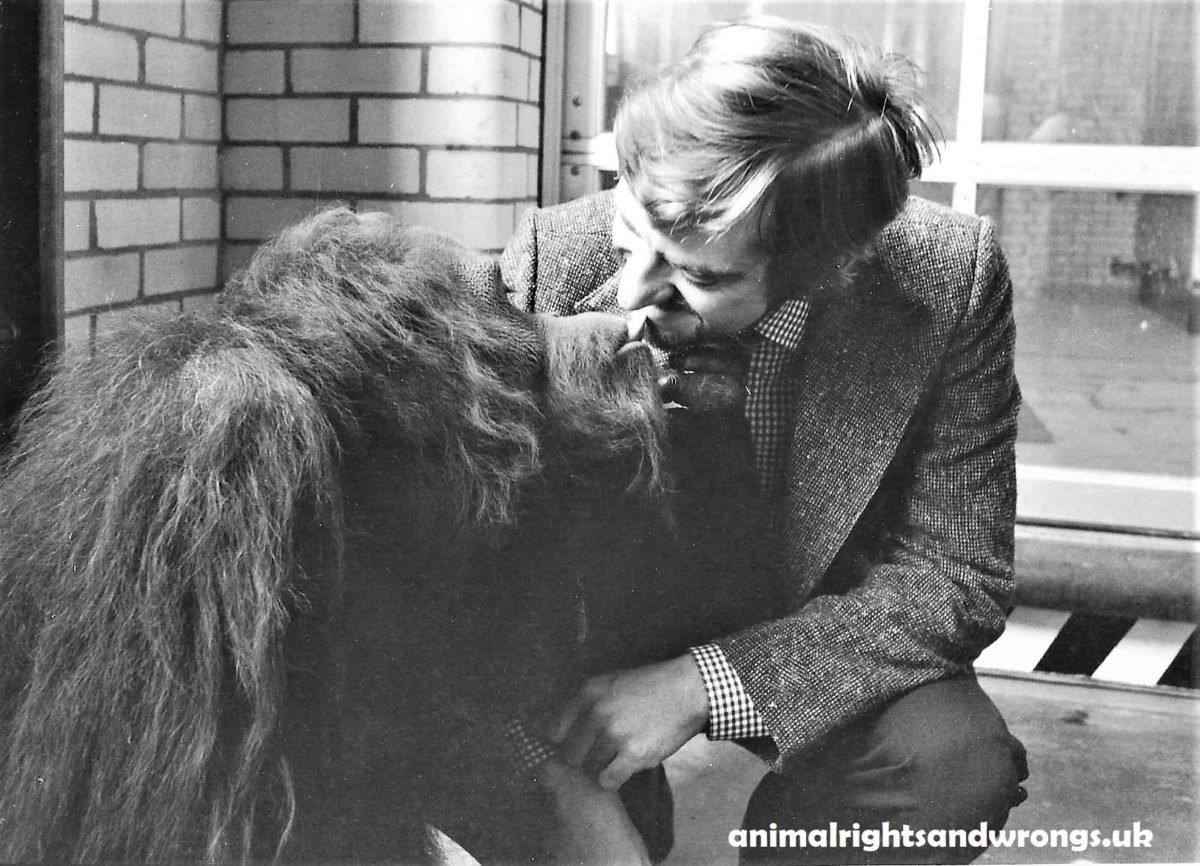
Our meeting occurred while I was duty manager at the London Heathrow Animal Quarantine Station, (now the Heathrow Animal Reception Centre), and I had to supervise C.J’s overnight stay as a VIP guest. She was transiting back to the USA following a starring role in the movie Any Which Way You Can with Clint Eastwood.

It was my first ever close up and personal encounter with a real live Orang and at one point C.J took a fancy to my beard and sidled over, without prompting from the trainer, and stroked it. C.J stared mournfully into my eyes and gave me a kiss and from that moment I have always been convinced that you can tell an animals’ state of well-being by the look in its eyes.
Orang-utan, animal actor, movies, animal cruelty
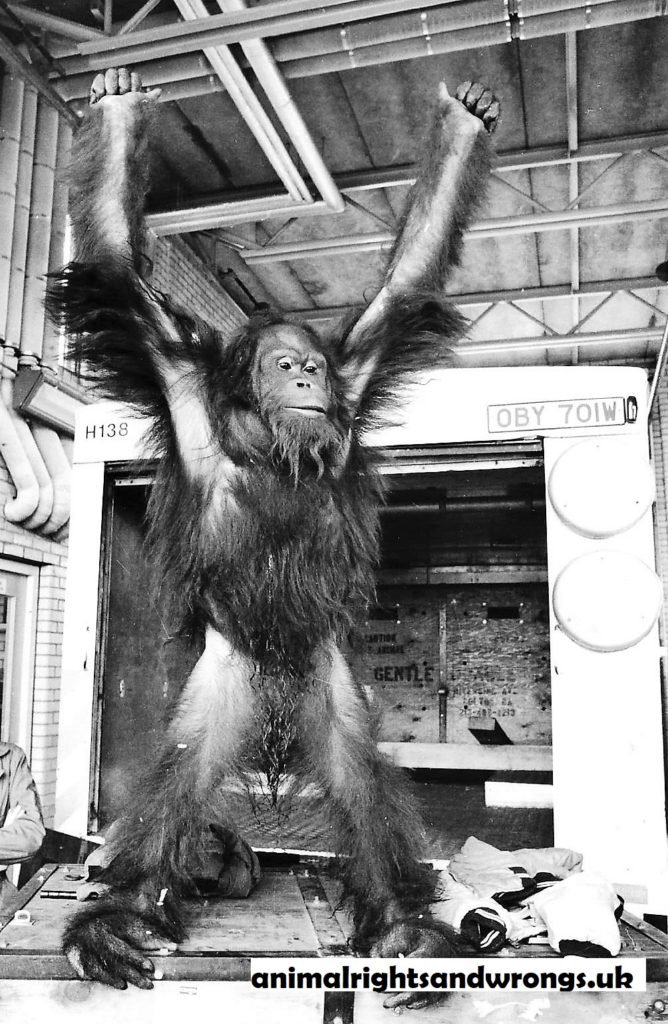
There was something very saddening about seeing C.J doing tricks at the command of the trainer and being so submissive.

C.J sitting in the staff lounge with coffee and cigar in hand was neither an edifying or humorous experience.

Although captivated and overwhelmed at our face to face meeting I could tell from its demeanour that this was not a happy animal and I was saddened and disconcerted at the way C.J had obviously been humanised, particularly at one point when the trainer made a cup of coffee and lit up a cigar. Seeing C.J sitting in the staff lounge with coffee and cigar in hand was not an edifying or humorous experience nor was the submissive reactions to the trainers’ commands.

The encounter with C.J gave me the firm belief that it was not acceptable to train animals for our entertainment and there was something very wrong with forcibly humanising animals in this way, particularly apes, which after all are more like us than most other creatures and do not deserve to be belittled in this way.

Death of C.J.

Information about the life and death of C.J is confused and sketchy and is often muddled with his actor colleagues Manis and Buddha who all played “Clyde” at some stage. They all belonged to the animal training company called Gentle Jungle who perhaps did not live up to their name when it came to looking after the animals. C.J. is said to have been born in the Dallas Zoo and had two trainers, Paul Reynolds and Bill Gage one of which accompanied him when he travelled through Heathrow that day.

According to the Los Angeles Times C.J or Clyde was badly beaten by a trainer for misbehaving during the filming of “Any Which Way You Can” and died later of a cerebral haemorrhage, but there is much debate about this. Whatever the circumstances of his death, his life was obviously no picnic despite the admiration and media coverage he received and meeting him just for the those few hours was such a privilege and had an indelible affect on me. I just hope in these times of CGI we can consign the use of live animals in movies to history.

Updated February 2020
Related Articles:

Veterinary practice is changing. Should we be worried?

The days of James Herriot are long gone.

The days of James Herriot, the famous kindly Yorkshire vet, willing to come to the aid of any animal at any time of the day or night and only accepting a cup of tea or a home-baked cake as payment are long gone and even the modern traditional independent veterinary practice in the UK is in danger of extinction.

Large corporate franchise groups are moving in and taking over everything to do with the veterinary industry, pets services, pet food and pet medicines; something that is prevalent in the USA. And as we know whatever America does we always follow, but is this good for pet owners and more importantly our pets?

This is not a new concept as forty years ago when I was working in a veterinary hospital in north London, local veterinary practices were buying each other out to form multi-practices across different areas in London.  This resulted in a lack of competition and freedom of choice with owners wishing to seek cheaper prices or better service forced to transport their pets long distances. This continues today in some places, but the problem is that large companies are now buying these practices out or offering franchises to form even bigger monopolies.

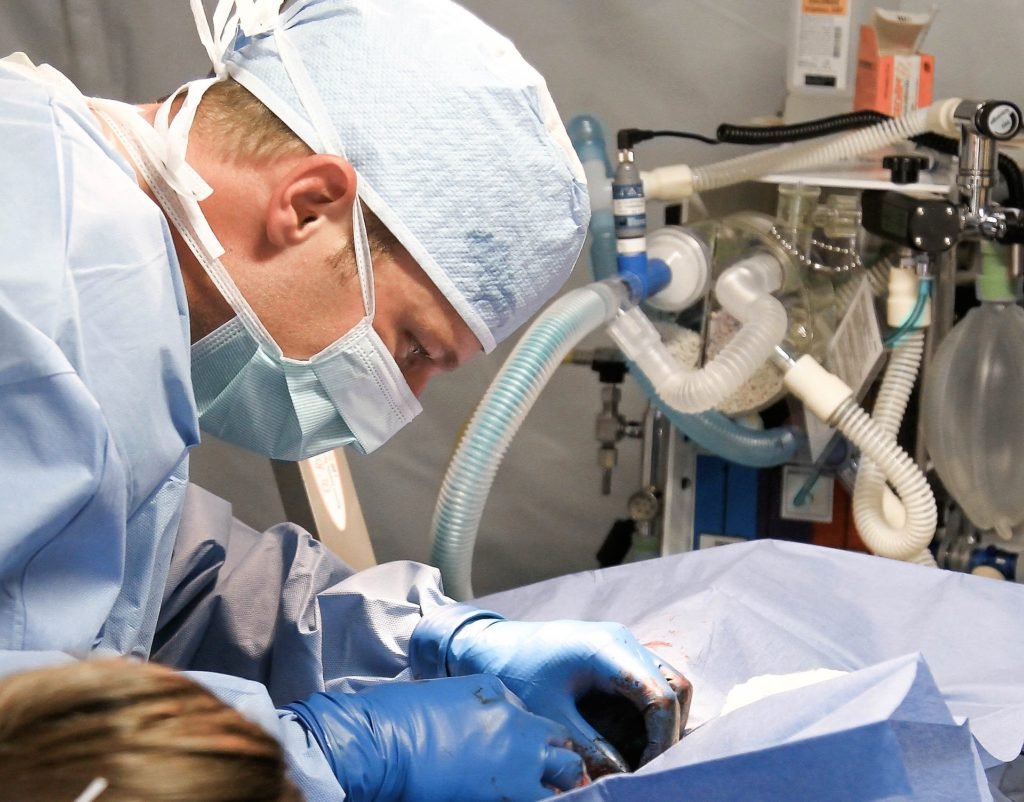
Veterinarian, operating, veterinary surgeon
Veterinary practices are becoming large corporate monopoly’s.

Should we be worried by big business taking over the veterinary profession?

The CVS Group plc and Pets at Home are the largest operators in the UK and are expanding at an alarming rate, both competing for the title of the largest veterinary services provider. This is obviously good for investors and the economy, but the best interests of the animals could get forgotten in the rush for profits.

CVS rates itself as the largest provider and its name is probably less well-known than its biggest competitor Pets at Home. At the end of 2017 it boasted over 460 veterinary practices, 4 laboratories and 7 pet crematorium employing 1,270 vets, over 1,800 nurses, 31 pathologist plus an online marketing company called Animed which sells drugs, pet foods and other accessories. Its turnover was £272 million and it purchased 67 vet surgeries in 2016 and 62 in 2017.

The UK Pets at Home company acquired two existing large franchises of Vets4Pets and Companion Vet which now work mostly out of their stores.  There are  296 in-store vet surgeries, 153  “stand alone” vets, 4 specialist hospitals, 306 grooming parlours and 55% of its stores have both a vet and a grooming parlour.  Its stores, online marketing and other activities bring in £843 million.

Big business controls over 900 veterinary surgeries

Both companies intend to buy out or open over 50 new veterinary practices each per year. As they already run over 900 and the Royal College Veterinary Surgeons state there are only 5,536 vet practices, these companies already control nearly 20%, which some analysts estimate will rise to 50% in the next ten years. They will also be controlling most of the diagnostic labs, drugs, pet food and accessories and other services like grooming and cremating your pet.

CVS has employed over 300 newly graduated vets over the last 3 years which is good for them and Pet and Home have set up hundreds of vets in business who would otherwise have had to wait many years to become a partner in one. They do this by providing the money, premises and equipment and taking a cut of the profits until the loans are paid.

All this clearly opens the industry up to the potential for monopolies, rising costs and perhaps poorer service becoming inevitable. These franchises can undercut and have promotions that attract clients away from traditional practices, such as cheap vaccination deals and once they have the clients through the door many no doubt stay with them.

Are home visits a thing of the past?

Many have already opted out of doing farm visits as there is more profit in treating a continual production line of companion pets in the warmth of their surgeries. Worse still, the few remaining farm practices are probably going to be taken over by ‘in-store’ farm vets.

The profession is already trying to turn its back on home visits declaring they are too busy, time-wasting and that owners should take full responsibility to get them to the surgery. They are even questioning twenty-four-hour coverage expectations. Dog, sick, veterinary treatment, veterinary surgeon

In the past they would cover their own out of hours, but now worryingly, most use specialist out of hours vet companies to offer this service. They mostly sublet a local veterinary practice for the night and weekend, move into it early each evening and at weekends and then move out in the morning having seen patients from most other practices in the area.

These companies no matter their protestations charge outlandish fees and have caused welfare issues when owners are unable to pay. A consultation fee can be as much as £150 plus and if overnight hospitalisation and treatment is required, such as an intravenous drip or x-rays, the bill rockets. Those kept in overnight are often sent home prematurely in the morning, and owners asked to move them to their own vet, as the practice they are operating from need their cages back for their morning admissions.

Where will it end?

Ultimately it seems that we will end up with all our veterinary services being controlled by a handful of companies who can dictate pricing, standards of service and care.  Although the veterinary regulating authorities who licence vets to practice might wish to intervene in the future it could reach a point where it becomes difficult if vets decide they have more allegiance to their employers than the veterinary college. It might be time for the monopoly commission to take a look at what is happening in the veterinary industry.