U.K. cats always lose out at any mention of legal status.

Because lost and stray cats do not pose a public safety risk.

Following the death of her microchipped cat Gizmo in a road accident, whose body was later disposed of by a veterinary surgeon without scanning, the owner began a petition to make it a legal requirement for dead cats to be scanned.

The petition, named Gizmo’s legacy, highlighted the fact that thousands of dead cats are not scanned therefore negating any chance of their fate being made known to grieving owners, many of who search for months or years trying to discover what happened to them. The petition called for a change in the law making it a legal requirement for local authorities and other agencies to scan any dead cats they collected or which were brought to them.

Cats always miss out.

The petition gained over 100,000 signatures and was debated in the UK parliament in 2019. Unfortunately the government did not agree, which is not unusual as it appears they do not rate cats very highly. Time and again whenever laws are considered to control or protect animals it is the cat that always misses out with preference always given to the control and welfare of dogs or livestock.

The government responded that it was unnecessary because local authorities, veterinary practices and rehoming centres are encouraged to do it anyway and they already have scanners because the law requires dogs to be microchipped and scanned. They pointed out that this is done to enable stray dogs to be quickly reunited with owners, but obviously do not feel that cat owners should have the same right. According to the Department for Environment, Food and Rural Affairs (DEFRA):

Whilst microchipping cats is good for their welfare, and it is important to publicise those benefits, lost and stray cats do not pose the same public safety risk as dogs, and therefore making cat microchipping compulsory is not considered necessary at this time. We will continue to work, therefore, with the relevant stakeholders to stress the importance of cat microchipping, and the scanning of stray or lost pets.

The reference to not posing a risk of public safety stems back to the Animals Act 1971 which made owners of livestock and dogs liable for any nuisance or damage but exempted cats allowing cats the freedom to roam. DEFRA also mistakenly pointed out that cats involved in road accidents had to be reported under the driver Highway Code Rule 26 which states drivers must report such incidents involving “animals,” but section 170 of the Road Traffic Act 1988 legally defines animals as livestock, horses and dogs. Cats again miss out.

Number wise cats are just as popular companion pets as dogs and loved just as much by their owners and their deaths grieved just the same so it only seems fair that they should be afforded the same chances of being reunited or to have their owners informed of their deaths to relieve the heartache of their loss. Perhaps it is time for the UK government’s attitude towards cats to change.
Related articles:

Kuno, canine war hero or cannon fodder.

Heroes or unwitting participants.

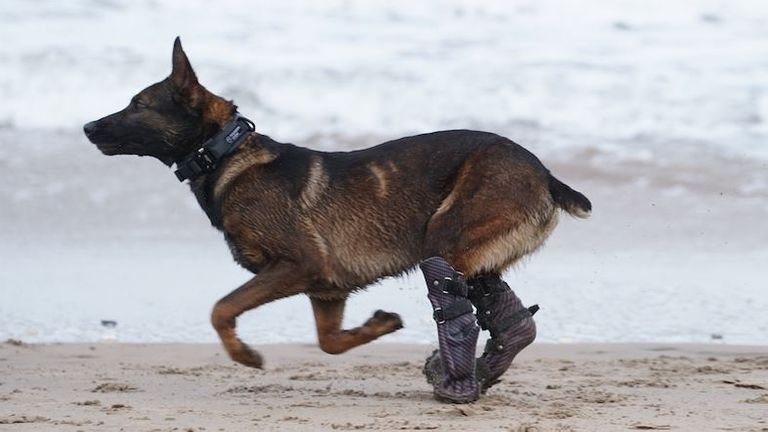
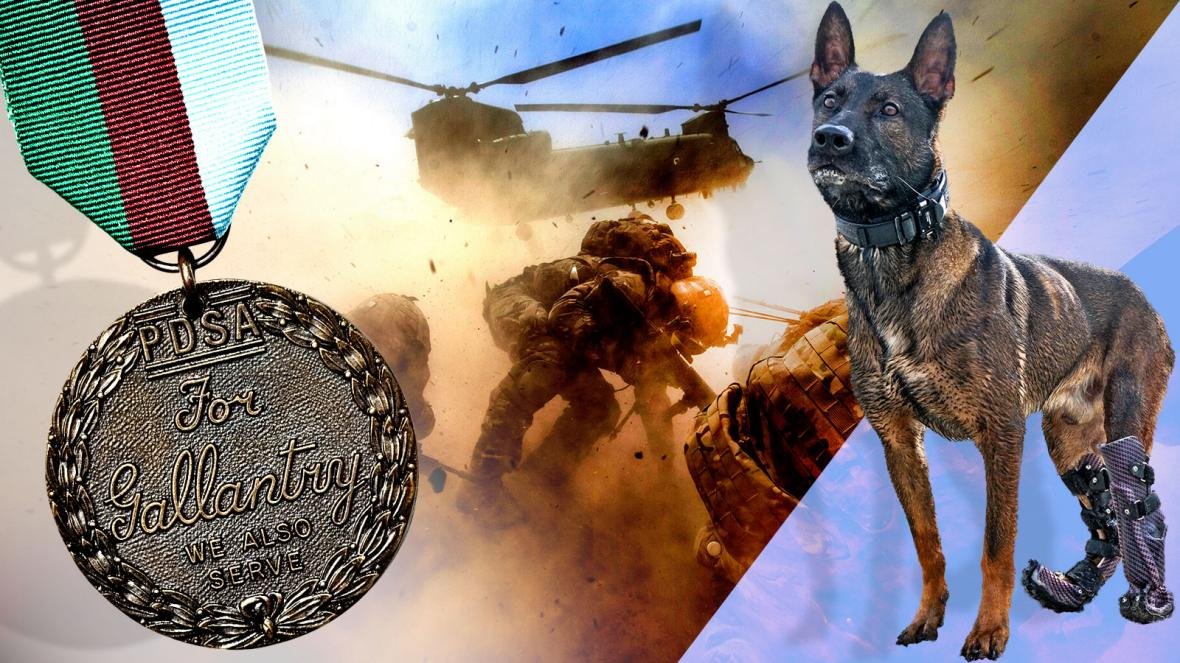
Kuno, a British military dog, has recently joined a long list of those that have been injured or killed in action in the line of duty and was awarded a PDSA Dickens medal for bravery as a “hero“.

Kuno, a young 3 year old Belgian Malinois, took part in a military operation in Afghanistan in 2019 and was seriously injured when helping his comrades who were pinned down from machine gun and grenade fire. He was sent in under a hail of bullets wearing night vision goggles to attack the al-Qaeda extremists.

It sounds like a storyline from one of the animated movies we are all so fond of where the heroes are animals doing great deeds, particularly the part of wearing night vision goggles. Unfortunately, this was real life and our hero was shot and suffered a multitude of injuries resulting in part amputation of his back legs. He now has the accolade of being the first UK military working dog to be fitted with custom prosthetic limbs and must contend with these injuries for the rest of his life.

“The great care the UK armed forces provide to animals”

The UK Defence Secretary stated that Kuno had changed the course of the mission by saving British soldiers lives but also added that the story showed “the great care that the UK armed forces provide to the animals that serve alongside them.” But it seems rather illogical to view sending a dog through a hail of bullets as providing great care of them.

Kuno miliatry dog and Dickens Medal for bravery
Heros or cannon fodder. [Photo credit:PDSA/TIMES PHOTOGRAPHER RICHARD POHLE]

Is it a betrayal of the trust they obviously form with their handlers to send dogs like Kuno to their deaths.

Surely to be a hero you need to have a fair idea of what you are doing at the time. Dogs have many attributes but understanding the dangers of charging into machine gun fire is not one of them. When we describe and fete them as heroes we are obviously humanising them and giving them the ability to process and acknowledge the risks and dangers they are getting themselves into, but this is against scientific doctrine and understanding.

Dogs will always try to cope with anything we demand of them and mostly treat everything as a game, so following a command regardless of its intentions is an act of trust and faith on their part and perhaps a betrayal of this trust on ours.

Are we doing them an injustice by giving them medals?

It is unclear what charities like the PDSA are trying to achieve by giving them medals unless it is to alleviate some of our guilt of putting them at risk in the first place. Although it is a poignant gesture, particularly when it is posthumous, and expresses our animal loving instincts the dogs possibly deserve better from us instead.

I have not thank god been in such a situation as Kuno and his comrades found themselves but I hope there was great heart searching when making the decision to sacrifice Kuno’s well-being to save their own. The story illustrates that these dogs are merely extra weaponry or ‘kit’ and are expendable in these situations and any consideration of their rights or welfare is not viable. But can we seriously call these dogs genuine heroes and glorify these enforced acts of so called bravery, when they have not ‘volunteered’ their services and are obviously unaware of what they are doing. At best they are just unwitting ones.

Related articles: