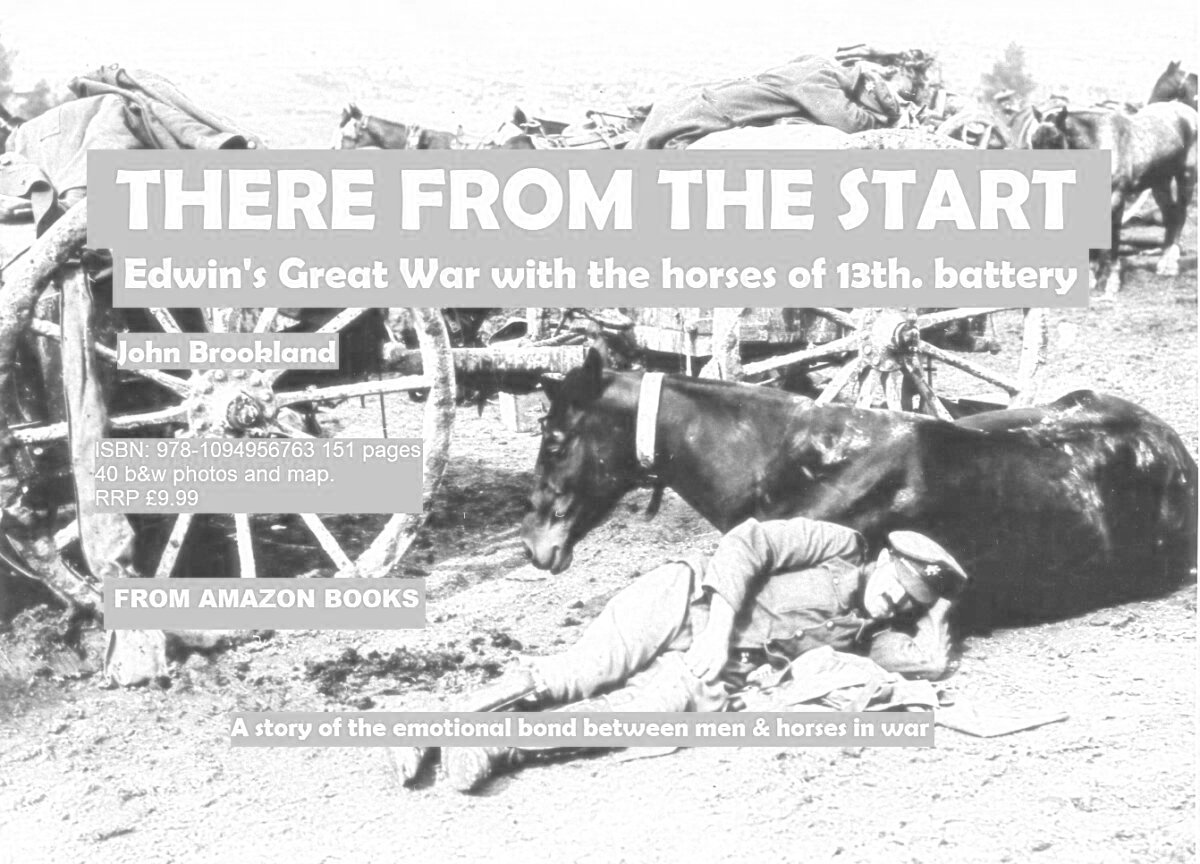
Read about the incredible emotional bond between the war horses and the men and how they survived the hardships on the front line.
Available from Amazon books or Special Offer direct from publisher bitzabooks.com. Buy Now £11.00 incl. p&p using PayPal button below. UK orders only. For North American orders contact bitzabooks@gmail.com or order from Amazon books.
Exploring the emotional bond between the war horses and soldiers in World War One.
My book There From the Start follows the exploits of my grandfather Edwin Clark who spent four Novembers during his 42 months on the western front with the Field artillery war horses. The book explores the extraordinary relationship between the men and the war horses and how they were trained and cared for under horrendous conditions.
The men were devoted to them, spending most of their working hours with them, and they helped sustain the men’s physical and mental well-being by being their confidants, friends and comrades.
Impossible to imagine the carnage.
They were in it together and just as the horses and mules did their utmost to help the troops the men reciprocated by doing all they could to ease their hardships. They fought and suffered together, faced the same dangers, often rested, slept and ate together and ultimately died together.
Edwin received serious injuries in early November 1918 when a bomb was dropped on him and his colleagues while they were feeding and grooming the horses a mile behind the front line. It caused carnage, killing and maiming many of the horses and men. I find it impossible to imagine the awful sounds, sights and smells he had to endure, made worse I’m sure by witnessing the suffering of his harmless equine comrades.
Farmers given free soil to barricade the countryside against hare coursers.
Despite the ban on hunting of hares under the Hunting Act 2004, the “sport” of hare coursing is on the increase and in practical terms virtually impossible to stop. It takes huge resources to police and even when offenders are caught there is little in the way of punishment or deterrent. Although banned throughout the United Kingdom it is a regulated competitive national sport in the Republic of Ireland and also popular in western USA.
“Hare coursing is as far removed from sport as you can possibly get. It is nothing more or less than the cruel use of live hares to train dogs to hunt them down and kill them just to make money”.
Gordon Henderson, Conservative MP, House of Commons, December 2020
The number of reports of illegal coursing is on the increase. In the English county of Lincolnshire, one of the hotspots for coursing, there were 1,048 reports between September 2019 and March 2020 up from 873 the year before.
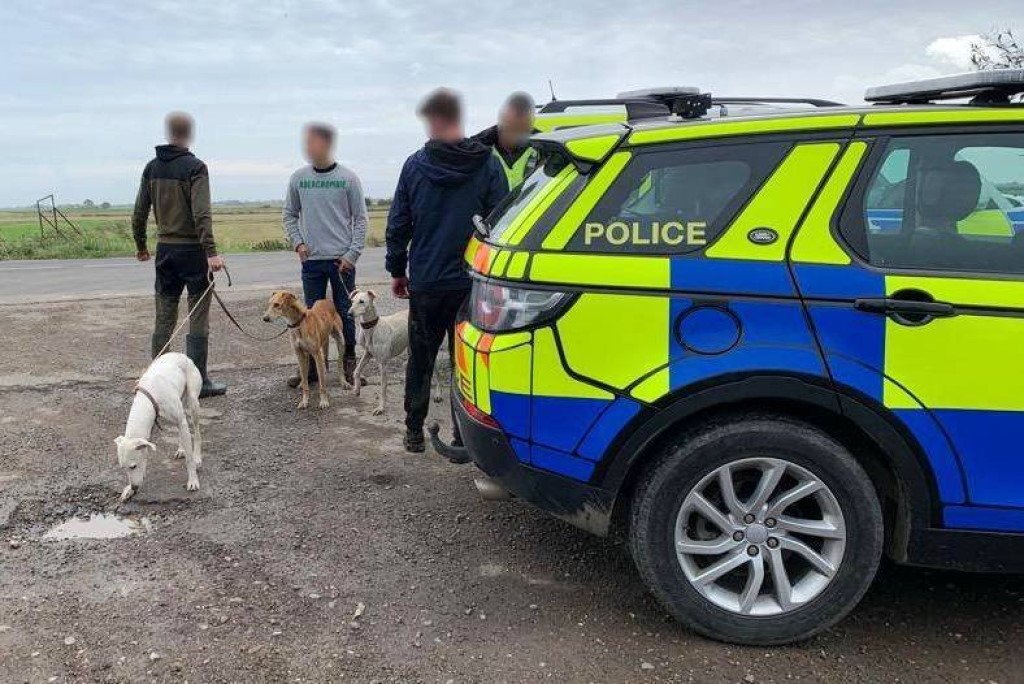
September to March are the peak periods for hare coursing when the crops in the fields are harvested, the hares are easily visible and groups of mainly young men with lurcher type dogs are commonly spotted driving into the open fields. Police rural crime units then brace themselves to be inundated with reports of illegal hare coursing.
Farmers under attack from hare coursing
Farmers are being threatened with physical assault if they try and intervene and suffering damaged to their land. It has reached the point where they are being asked to barricade their fields as a detterent and the police are using drones to catch offenders. Farmers are worried that someone will soon be seriously hurt and that the Hunting Act 2004 needs to be tightened and punishments increased.
“Hare coursing can cause significant disturbance in the countryside”, as well as causing a lot of concern to people living in the wider rural community where the activity takes place.”
The Crown Prosecution Service
Farmers view hare coursers as hardened criminals and are asking for tailored sentencing guidelines with such things as mandatory seizure of vehicles and dogs and payment for kennelling by offenders, compensation paid to landowners for any damage caused, more powers to the police and courts including much higher fines that can be imposed for poaching offences. Antiquated laws dating back to 1828 and 1831 are still being used to prosecute and the Government have been asked to review and update these laws by removing the cap on the low fines allowed.
Police do not have the resources, powers or the legislation to stop this barbaric destructive and illegal “sport”.
The police report that offenders will do “all they can to get away” firing catapults at officers and farmers alike. They use threats, violence and intimidation to prevent members of the public from reporting them. Police advise any walkers or passersby who spot hare coursing to take great care and keep themselves discreetly hidden while making the call for their own safety.
Incentive to build barricades against hare corsing
In the English county of Suffolk, where hares are plentiful, free soil is available for farmers under a Country Land and Business Association incentive scheme to build large earth barriers or bunds along their field lines and entrances into their fields. Farmers are also asked to block entrances with tree trunks and other obstacles and make ditches deep.
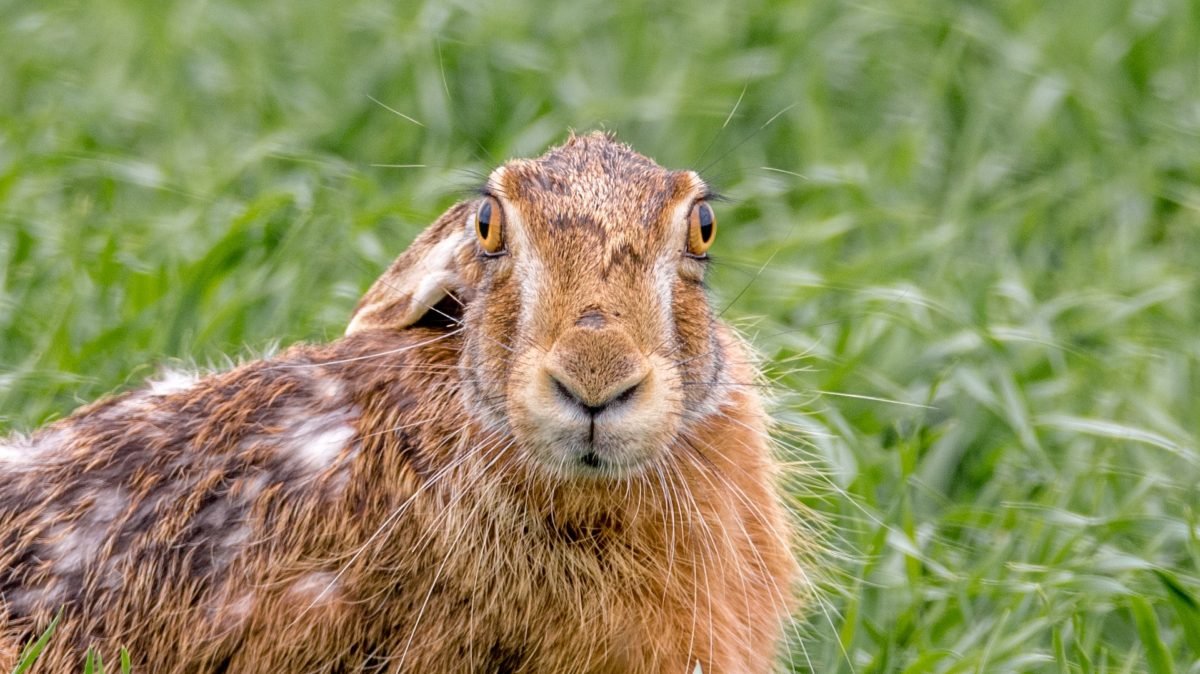
It is basically an impossible situation for the police who find it difficult to control urban areas let alone great swathes of dark open countryside. But updating and strengthening laws which are not fit for purpose at the moment would be a help to them. It is a sad state of affairs when we cannot protect and prevent suffering to one of the iconic animals of the English countryside which is already under pressure from their unnecessary status as pests.